Thesis Update

on Tuesday, October 30, 2012
My contract with the university ends at the beginning of September 2013. And no contract means no salary means Big Trouble. To avoid Big Trouble, I will finish my PhD before my contract ends. Yes, it's that easy.

Well, maybe not. Maybe finishing a PhD takes a little more than just the fear of Big Trouble. Maybe it requires pushing through really hard to make sure I can finally go and live in the same place as my husband. Maybe it takes a little anger and a spoonful of frustration.

With 10 months on the countdown, things do look quite good here, and I thought it's time for an update on my thesis.

I'd like to go chapter by chapter, to illustrate what I still want to do.

Chapter 1: Introduction: Finished and got feedback from co-promotor and promotor. I do want to go over it once I have all chapters finished to see if the description still covers the contents.

Chapter 2: Literature Review: Finished and got feedback from co-promotor and promotor. I want to go over it once more and put more emphasis on the theory I ended up using for my theoretical work.

Chapter 3: Experimental Results: Finished and got feedback from co-promotor. I think it's done done done, unless my promotor has comments.

Chapter 4: Parameter Analysis: Finished and got feedback from co-promotor. Not sure if my promotor agrees with the way I structured the chapter....

Chapter 5: Modified Bond Model: Aka my theoretical chapter. It's in progress, and I really hope to finish it next week - unless other work is going to get in the way again.

Chapter 6: Probabilistic Assessment: I still need to implement to comparison between the Modified Bond Model and my experimental results in there, but the bulk of the chapter is finished. I sent it off to prospective committee member because he's an expert in structural reliability.

Chapter 7: Application to slab bridges: I need to add one paragraph on skewed bridges, but other than that it is finished, but still needs to be discussed with my supervisors.

Chapter 8: Conclusions: Work to be done!

As you can see, I have quite some material ready there. In fact, my goal is to finish the first draft before the December holidays. Afterwards, I can't defend it right away. In Delft, it takes time for the promotor to approve it, then compile the committee, then send it out, then make changes and then print the whole thing. I'm still hoping for printing and defending before September 2013 though.

Vrouwennetwerk 2.0

on Sunday, October 28, 2012
This post is in Dutch - in short: I'm heading to Universiteit Utrecht to give a workshop on (micro)blogging for PhDs and Post-Docs on November 8th.

Het Vrouwennetwerk van de Universiteit Utrecht organiseert op 8 november aanstaande haar tweejaarlijkse netwerkdag. Alle medewerkers van de Universiteit Utrecht zijn uitgenodigd om kostenloos deel te name, mits inschrijving (plaatsen zijn beperkt). Het belooft een ontzettend interessante dag te worden, dus als je in Utrecht zit, kom zeker langs!

Het programma
9.00u - 10.00u: Inloop, inschrijving, kennismaken, netwerken, koffie en thee
10.00u -10.30u: Introductie door het Vrouwennetwerk. Probeer een laptop mee te brengen
10.30u - 12.00u: Interactieve Lezing + discussie
12.00u -12.15u: Digitaal intermezzo
12.15u - 13.45u: Lunch, infoplaza, uitwisselen en netwerken
14u – 15.30u: Zes workshops, waaruit je kunt kiezen
15.30u – 16.00u: Thee/koffie
16.00u – 18.00u: “2.0 doen”, gelegenheid tot netwerken, borrelen, dat alles met een gezellige
muzikale omlijsting door salonduo 'La bohème'

Workshop: "(Micro)Bloggen voor PhDs en Post-docs."
Waarom is het interessant om als wetenschapper te bloggen en tweeten? In deze workshop kijken we naar een aantal verschillende aspecten: hoe je(micro)bloggen kan gebruiken om je (online)(inter)nationaal netwerk uit te bouwen, hoe je jezelf en je onderzoek zichtbaar kan maken, maar ook over wat je kan weerhouden om een blog te starten.
Via een korte tutorial kijken we ook naar het praktische aspect. Het doel is om tot een omlijnd idee te komen over welke onderwerpen en waar je aan de slag kan met (micro)bloggen.
Door ir. Eva Lantsoght, PhD student TUDelft. Blogt op phdtalk.blogspot.com over haar onderzoek, over promoveren en de niet-wetenschappelijke vaardigheden die daarbij aan bod komen, en overige onderwerpen zoals reizen en kunst. Twitter: @evalantsoght

Towards better concentration in five steps

on Thursday, October 25, 2012
Recently, I was asked in the comments of my post on motivation for my input on concentration. I've quickly given an answer in the comments, but I'd like to expand on the topic in a full post.

Concentration is not my natural strength. With a concentration span of about 20 minutes and my generally super-scattered brain, I've needed to work hard when I started university and couldn't simply study 20 minutes before an exam anymore.

My first years at university were not a big success (or at least, my grades were not as good as I would have wanted them to be), mostly because I didn't put my concentration where I had to.

Bit by bit, I started to learn how to focus (still working on it though!), and at the end of my studies, I was back to studying very few hours per day during exams, but with more concentration and dedication - which also resulted in significantly higher grades.

Therefore, I've gained some experience in observing my own habits and how to improve your concentration. I've already given my 10 tips for a better concentration, but here you can find 5 easy steps to implement and work towards a better concentration:

1. Know your tools

Identify the length of your concentration span: during a few work days, note down precisely how long you stay at one task. You can as well use a software tool, like ManicTime, to tag your time slots (but then, make sure you consistently tag whenever you leave your thesis document and go browse online or run off to the coffee machine).

Knowing how your brain works regularly is absolutely important to improve your concentration. Only once you know what you can work with, you can also work towards expanding your concentration span.

Action: map your concentration span!

2. Clear goals

This example should give you a sense for setting clear goals: compare "write thesis from 8am to 6pm" on your to do list to "write 400 words on paragraph 5.3.4 in thesis between 10am and noon". Setting clear goals, and knowing what precisely you need to do in which time slot, allows for less drifting off in thoughts.

Action: take your planning tool and schedule clear goals.

3. Frequent breaks

If you want to have several hours of deep concentration in a work day, then it is absolutely important to unwind every now and then. In the Pomodoro technique, 25 minute sets of concentration are alternated with 5 minute breaks, and a longer break after 4 Pomodoros. If you try to force yourself to sit on your chair for hours and hours, your mind will start to wander and you'll make slower progress. The key is to take short, but frequent breaks such that you can stay at a decent level of concentration throughout the day.

Action: build some air into your schedule and try a timing technique.

4. Take care of your body

You can't concentrated when you're tired, sick or generally unwell. Therefore, it's important to find time to prepare wholesome food, work out, relax and get your hours of sleep. Sleep deprivation is one of the most common reasons for poor concentration.

Action: Take that planning tool again, and schedule time to take care of your health (gym, cooking a healthy meal,...) or skip some commitments to safeguard your 8 hours of sleep.

5. Meditate

If you want to improve your focus over a longer period of time, there is no better way than to work out your brains. Meditation is indeed nothing more than a good workout for your brain (plus all the benefits that are associated with meditation!). As a researcher, you're "paid to think", and therefore taking good care of your brain and optimizing its performance is very important.

Action: Look at your schedule. At what point during the day can you guarantee 5 minutes for meditation?

Fifty Shades of Concrete

on Tuesday, October 23, 2012
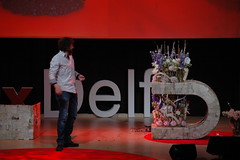
My TEDx Delft Salon talk is online! 


The active bird catches the worm

Over the past 10 years, I've been a student, and thus living as a student in shared houses. In total, I've had 36 housemates so far (if I didn't forget to count anyone), and I have lived with different characters. But most of all, I think you can subdivide people in the go-getters and the sedentary folks.

When I started studying, I was already juggling a lot of activities: my studies, my band, my music classes and an active student life. Nowadays, I am juggling a PhD, lots of transatlantic trips to see my husband, almost daily workouts, taking care of my cat, actively playing music, blogging here and there, reviewing CDs, daily meditation, daily journaling and a tadload of other activities. You might get tired at the very idea of buzzing around all the time, but it mostly boils down to having the right mindset. Admittedly, I might come across as 10.000 Volts kind of person, but moving around and doing different things is exactly what fuels me up and what sparks my creativity.

Here's how you too can make the switch and become a go-getter:

1. Different activity, different location

For me, moving to different places and having appointments here and there is key to finish one task (for example my research day), and then get to the next place (for, say, a workout).
When I plan to work from home, eat at home, and do some yoga at home - my day becomes too blurred and I might not get much out of it. When I take the energy level up and move from the office to the gym to home and maybe some store on the way,  I actually feel fueled up.

2. Good planning

Vague ideas on the different activities you'd like to add to your schedule won't actually get you there. Know the dates and times and plan accordingly. Also, a good planning will help you to get more hours out of your day - we all know that, but really, having a schedule can prevent you from sinking in the TV/internet/... black hole.
Having a fixed day or gym class will help you consider it as an appointment. Not only will you be more productive during the day because you have something to look forward to, but you will also notice that additional activities energize you.

3. Be active, everywhere

What I observed over time is that the go-getters are the people who work hard, play hard, and, while they're somewhere, see what needs to get done, roll up their sleeves and get it over with. You won't easily catch me staring in the blue while I wait for my food to cook. I typically will start putting dishes aside, cleaning up part of the kitchen (very much inspired by Zen Habits cleaning as you go) and prepare lunch for the next day.

4. Put your heart and mind to it

Being active is easier when you put your heart and mind to what you do. When you're fully dedicated and passionate about your activities, it's easy to keep the flame alive.
In the end, it's about knowing what you can do, and simply doing it.

5. Really enjoy relaxation time

The fact that I like to be jumping around and going here and there doesn't mean I don't value downtime. It only means that I more consciously enjoy my downtime: relaxing in the sauna after the gym, drinking a cup of wine in the evening, watching something online - I experience downtime as much more rewarding when I have been active for the entire day. It's similar to the idea of celebrating your successes in research.

Science is Fun, Science is Play

on Sunday, October 21, 2012
When I went for my PhD Start-Up training course, I learned to know the expression "Science is fun".

In the end, as a researcher, you are in the privileged position to play around with ideas, use your time to explore different paths and -most likely- in one way or another carry out experiments nobody has ever done before.

You are not required to follow existing flow charts to solve a problem, but are instead encouraged to explore possibilities, and you are given the time to truly explore the research question in order to advance your field. 

The basic character trait you need is just curiosity: the ability to ask yourself why are things the way they are? And then, in order to study the implications of this question, you need to set up a game. When described in these terms, research is something that is absolutely suitable for children as well. Beau Lotto tested the scientific method with a group of school children - and ended up having the kids become published scientists. This video is one of the best insights in science I have seen in a long time - please enjoy, share, and -if possible- go and spread the love for science to young children.

More than "Science: It's a girl thing!" in which science is Barbified, I think that we need young girls to learn that "Science is fun" by actually exposing them to true science, such that they can experience what it is really like.

Performing for TEDx Delft Salon

on Friday, October 19, 2012
And so the day has come that I gathered all  my courage and gave it my best shot!

The whole journey started almost 10 months ago, when I got an invitation to come and discuss the possibility for a TEDx Delft Salon talk on concrete. I expected that somewhere along the way I'd be kicked out for not being good enough (imposter alert!), but that never happened and I ended up taking my concrete story to the stage...

To start preparing for the performance, I wanted to wipe out all my previous conference presentations, and go back to the roots of my interest in concrete. I reframed the main question: Why is concrete an interesting and versatile building material?

When I started preparing my TEDx talk, I received great guidelines written by Rob Speekenbrink (TEDx Delft founder) and while initially I wondered if all of that is necessary, I learned along the way how important these bits and pieces of advice are.

Now let me go into detail on some of the points that are entirely different from giving a research lecture at a conference:

1. You're a performer

You're in there as a performer, with an audience that wants to learn from you but also wants to be entertained. Initially, I thought if I'd just talk a bit about concrete, that would do. But then I realized I needed to try and make a more lively story, by adding personal anecdotes and using analogies (I used cake throughout my talk).
Initially, I found this idea terrifying. But then, I thought that, if I could climb the stage of a local theater at the age of 17 with a saxophone and a few poems by Pablo Neruda in my head to give an entire performance, speaking about my material of choice for 15 minutes wouldn't be too hard...

2. Listen and learn

This advice does count for conferences as well - but here I mean it even more literally: what kind of story structure do you like best? How do others use slides as a simple visual support? Our focus here is on the techniques others use to convey their message. I've been watching so many TED(x) talks over the past months to learn from others how to deliver a great talk.

3. Write it out

Usually I improvise on the spot and use my slides as a starting point. For this talk, I was asked to write out my story verbatim. I wrote, and rewrote and wrote the last version 10 days ago. Leaving blanks in the text also helped me to define resting points in the story.

4. Have yourself recorded

Although I've been recorded for conferences, lecturing from a lectern, being out there on a stage feels very different. I was recorded on my 3rd trial, and I hated everything about myself in there: my constant blabbering, my gestures and how I pull up my eyebrows. Being aware of these stress-induced actions helped me to focus on my gestures.

5. It takes time

A minute of public speaking takes an hour of preparation. My 15 minutes of TEDx Delft Salon took 55 hours of preparation, just to give you an idea.

6. Don't forget to enjoy

Right before delivering my talk, I looked at the room and told myself: "Well, all these people have come here because they're interesting in the free lunch and your story. Isn't that really cool?" So instead of holding my breath and trying to get it over with, I tried to enjoy the experience (can't say I really succeeded, but at least I tried to enjoy it)

Powerposing to boost your conference presence

on Wednesday, October 17, 2012
I recently feel very inspired by an article and a TED talk that I came across.

The article gives advice on how you can succeed at conferences as an introvert. As an introvert myself, going to a conference can feel like a daunting task, but I recognize myself very much in Brooke's story.

Similarly, I tend to give myself a virtual kick in the mind when I head out into a crowd of unknown, awfully smart people who might discover a flaw in my work. I tell myself to keep my shoulders low and my chin up. Little did I know that actually altering your posture might have a positive influence on your performance. Therefore, I feel eager to share Amy Cuddy's TED talk. She advices us, not to just "fake it until you make it", but to actually "fake it until you become it".


Do you have a way to push yourself out of your comfort zone during conferences?

Power of We

on Monday, October 15, 2012
Today is Blog Action Day 2012, and the topic is "Power of We".

From my perspective, the "power of we" lies in the learning network the (online) academic community has offered me. Today is the right moment to reflect on how I have benefited and continue to benefit from this community.

1. Research skills

I have written this before, and it's not the last time that I'll mention it: I've learned so much from participating in (or catching up afterwards) online chats on research skills (#phdchat, #ecrchat, #acwri) and by reading blogs.

2. Exchanging ideas

Online learning networks are a perfect playground to test out ideas, and exchange ideas to see in which way your story can be best told. 

3. Learning about your field

I enjoy very much reading news from the construction industry and from concrete manufacturers and research institutes. Most of the time their work is not related to my research at all, but it is interesting to learn more about the broader field by reading articles online.

4. Learning about higher education

The internet and online learning communities are again a perfect place to learn about higher education practices and policies throughout the entire world.

5. Follow events you can't attend

From webinars and podcasts to liveblogs and Twitter streams: there typically are plenty of possibilities to follow an event online you can't attend physically. 

6. Connecting with like-minded people over the disciplines

Another great learning experience has been to connect with like-minded researchers from completely different disciplines and to understand how similar their experiences are and how much I can learn from that.

And today, I not only want to focus on the benefits of my online learning network, but I also want to give a shout-out and a massive thank you to everyone from whom I've learned - deeply appreciated!

What I learned from liveblogging

on Saturday, October 13, 2012
I've already mentioned it so many times here that I had the privilege of being a liveblogger for TEDxDelft, but in this post I would like to focus on liveblogging itself. Two times I have liveblogged as of now, both at TEDxDelft (2011 and 2012), and I certainly have some take-home lessons that I would like to share with you.

First of all, I think liveblogging is unlike anything else. Writing at the brink of the moment not only causes incredible focus in me (I am going to tap into that zone for my thesis), it also helps me to think fast and build sentences in a snap.

Just like last year, I managed to write 4 entries for the website over the course of the day, and I did some tweeting along the way. But this year, I had a better plan, and I'd like to share that with you:

1. Preparation is key

Unlike last year, when I showed up, opened my laptop and gave it my best shot, we had a plan this year (thanks to our webcare team leader @marionvanputten). I knew exactly which performers I'd be writing about, and I had done my homework and researched them before the event. Although I still had to look up some things while writing the posts, I did feel much better prepared, and with more background knowledge.

2. You can't cover everything

Last year, I tried to listen to all talks, read all tweets, hear, see and follow everything around me - and in the afternoon I was completely overloaded and with writer's block. This year, I knew which performers to cover, and made these my priority

3. Stop and pause

In between writing about the performers I was supposed to cover, I took a moment to let my mind wander, stretch my legs, make a phone call and refuel. This year I did not experience any writer's block at all.

4. The zone

To deliver the best liveblog posts on "my" performers, I went into the creativity zone from the moment the performer stepped on the stage to the moment I hit the "publish" button in WordPress. I followed every step, expression, word and emotion of the performer, made notes and started writing after the performance. At the moment that I started writing, I chose to block out all external noise and blast some loud music in my ears (Dark Tranquillity in the morning, random futurepop in the afternoon) - such that I could be away from the world and get going with writing. I managed to experience some incredible focus by doing so.

5. Don't forget to eat and drink

My take-home message for next time: don't forget to drink! I certainly didn't drink enough water during the event, so I woke up with a headache the next day. A mistake not to be made again!

6. Sit straight

Another take-home message: I should keep my toes warm and sit straight. After a day of hanging in a chair hunched over my laptop, I felt like an old lady with a broken back the next day. My feet got cold and rained out in the morning, and sitting still made all joints from the hip to the toes hurt. The same sometimes happens when I work from home...

Here's the catch: I came to realize many of these observations count for thesis-writing as well. The time pressure and the "now" might not feel that urgent while you write a chapter, but try to tap into that creativity zone, and I'm sure the words will start to fly onto the screen.

Kick-off 3TU.Bouw

on Thursday, October 11, 2012
On Monday October 8th, I gave a short PhD pitch at the kick-off meeting for 3TU.Bouw Center for the Built Environment, which combines the four academic Built Environment faculties of the Netherlands. My PhD pitch (5 minutes presentation) represented the faculty of Civil Engineering and Geosciences of Delft University of Technology. The event also allowed for outreach to the public sector and the building industry of the Netherlands.

In my presentation, I gave a quick overview of the project on the capacity of existing concrete bridges and briefly discussed the research from the group of Concrete Structures, Structural Mechanics, and the cooperation with TNO and the Dutch Ministry of Infrastructure and the Environment. The end of the pitch focuses on the impact of the research: the (inter)national scientific impact of this project, as well as the broader impact on society showing how this project contributes to a more sustainable future.

I've shared my slides on SlideShare:


The recording of the presentation can be viewed here (at 48:30 my presentation starts):

Reading loads: Archiving after reading

on Tuesday, October 9, 2012
This post is part of a series on reading loads, in which I discussed the different levels of reading and keeping up with the output previously.

What do you do after you finish reading a paper? Do you simply throw the article on a pile on your desk? Do you take any action at all?

In my opinion, archiving a paper is as important as reading it. Nothing is as annoying as when you realize you read something interesting, but can't remember the author nor title. And that's exactly the pitfall you want to avoid if you keep up with the output.

By investing just a few minutes of time after reading a paper, you can archive your articles and find these back when necessary. Here's a few things to consider:

1. Electronic archive

If you undertake a research project that spans multiple years, you will need referencing software. I use Endnote, and I archive all papers I have read into my PhDBibliography library. At the university network, I use ISI Web of Knowledge to look up the paper I read, and most of the times I can simply download the information (full reference, abstract, keywords, times cited,...) into Endnote. I then add the .pdf version of the paper to the reference, to make sure I can always find the reference back.

2. Paper archive

In this regard, I'm totally old-fashioned: I still print everything I read (some day, I'll switch to a tablet reader). I don't want to toss the paper that I read into the thrash, also because most of the time I sketch and comment in the sideline. Therefore, I archive all hard copies of articles. As I described here, I have everything in alphabetical order for the first author. When I'm not sure who wrote the paper I'm after, I can still search in my Endnote library on the keyword or date.

3. Notes on paper

Besides sketching and commenting in the sideline, I also note down a few keywords or a short summary on the first page of the paper. This method not only helps me to summarize what I just read, but it also helps to bring back the topic if I revisit the article.

4. Notes and tags  

In Endnote, I try to add keywords or some additional comments such that I can make a search for a keyword and have all relevant articles showing up. A search for "sustainability" or "compression strut" for example can be very helpful when I prepare a paper and need to write the introduction and literature review by referring to the relevant papers on that topic.

TEDxDelft LiveBloggers

on Sunday, October 7, 2012
At TEDxDelft, I had the opportunity to be liveblogging in the company of some inspiring writers. The atmosphere in the webcare room was of utter concentration and team spirit at the same time. We all worked hard and arrived to the venue in the very early morning to get started, and I think we can be really proud of all the articles on the TEDxDelft website. Since I can't make floral art like Pim van den Akker, I'll just say that I felt honored to be writing in the company of these wonderful people - and I think you should go and check out their blogs!

2 Flow with Eve: (in Dutch) on working towards a new world of work at Delft University
The Self Help Hipster:  PhD Student in distress, go and read how to improve your condition
Merel graduates: giving you a glimpse of the final year of Merel's studies
la susea: inspiration on design, art, travel, photography and living in Holland
Clineschrijft: (in Dutch) #blogbriljant: bouw een briljante reputatie met je blog
Mandy: (English/ Dutch) on all that catches her attention as a designer
EmmaMedia.cc: (in Dutch) social media and online marketing
Eye on Orbit: on space exploration
Zielsgenot en Pijn: the world of Carolien, recovering from a burn-out
De TekstGroep: Website of journalist and writer Hans Dalmeijer

Storify on TEDxDelft

on Saturday, October 6, 2012
Check out the Storify I made on PhD Talk blogging for TEDxDelft!
It gives you an overview of how I experienced the day, from the night before to the day after.

TEDxDelft: a recap


Yesterday I was liveblogging for TEDxDelft. As you can see in the picture (I'm at the left, in purple), I spent a day in super focus, resulting in 4 articles for the TEDxDelft website of which you can find the links in my summary of guest posts.

As this was only the second time that I was liveblogging, I plan to write a post on my "lessons learned on liveblogging" some time later. As for today, I want to give you a summary of my insights after TEDxDelft.

Since I was liveblogging, I stayed in the webcare room the whole day, and while I was writing about a performer, I had to block out the livestream to focus on writing, so I missed a few performances. Trouble with the livestream also made me miss everything from the opening up to most of the performance of Boyan Slat.

Bennie Mols gave us his view on the future of robots. I learned that our multifunctional human brain uses 20 Watts, as compared to supercomputer Watson's using 6 MW.

The next performer, Marwa Al-Ansary shared her story with us on how she struggled to become an engineer and how she is always the odd duck - but she takes that position with all her courage and makes a change. She left me very impressed and inspired, as parts of her story also resonate with my own experiences.

After missing out a few performances, I was left completed blown away by Sarah Kay's recorded performance at TED2011, leaving a note to myself that I should YouTube spoken word poetry:


After writing this introductory post and getting lost in her world for an entire evening, I was absolutely looking forward to the performance of Manon Ossevoort. Absolutely a performance to watch again some time soon - and my inner explorer was absolutely triggered: if a girl on a tractor with a maximum speed of 20 km/h can drive all the way to Cape Town and be safe, everything is possible.

I had been looking forward to Erik Schlangen's performance on self healing asphalt as well, and I loved the way how he brought a lab to the TEDxDelft stage. And that microwave on stage looked very familiar - I use it (or a similar one in the lab) to warm my soup in the wee hours of the evening.

After the beautiful song by Judith Adema, Ionica Smeets showed us the dangers of ice-cream or, why correlation does not mean causation.

The next performer, Wendy Lampen gave us a look into her world. Having a strange brain myself (it does "parallel processing", I try to explain others) and being highly sensitive, I found myself nodding at the example she gave on how her memories sometimes work. She brought a strong, heart-warming performance on the TEDxDelft stage.

Becci Manson's recorded video is absolutely inspiring as well: using your talents to make an impact on other's lives.


After Tom de Bruyne showed us how a fake online medication website really shocked it's visitors, the winner of the TEDxDelft 2012 award Nupur Kohli brought us lessons from children. Did you know that on average a baby smiles 400 times a day, a youngster 14 and an adult just once? She urges us to become an adult with a child in our heart. I've made a mental note that I should smile more often and ask more questions.

Bas Lansdorp made me dream of heading out to Mars on a trip (provided I can bring hubbie, kittie, burgundy wine and an internet connection with me), and afterwards Nynke Tromp suggest that we should vote on our birthday to avoid the influence of the media performance of the politicians.

At the end of the day, I had the feeling that my brain was on 10.000 Volts. Even though I was dead tired (we started with pep talk at 6:45am and wrapped up around 8pm), I was too fueled up to just crash down when I got home. I learned so much, and I am sure the impression is meant to last. In the meanwhile, I'm looking forward to find the videos of the performers online, so I can catch up with what I missed out on while I was writing.

Liveblogging at TEDxDelft

on Thursday, October 4, 2012
I woke up at 5:45am today to arrive to TU Delft Aula (the main auditorium) in the very early morning to get the organizer's peptalk and get started for a day of writing, writing and more writing (sure will be more than 750 words today!).

The performers I'll be liveblogging about, are Marwa Al-Ansary, Erik Schlangen and Wendy Lampen.

If you want to follow the liveblogs (we're a room full of bloggers ready to give it our best shot), check out the TEDxDelft website. The program is up here (we're in GMT+1 time). You can also follow our livestream, and on Twitter we want to create a #TEDxDelft buzz!

Let's get inspired, release our inner child and remember: never grow up!

A fresh start

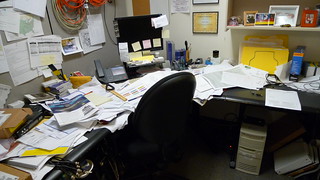
I recently found myself stuck in trying to solve an issue in my research. My desk was filled with possibly related papers, notes, sketches, books and more random stuff.

At a certain point I felt that I could not move forward anymore in my mind. I started sorting out everything that I had gathered, and I kept what I thought was necessary to solve the problem. This strategy turned out to be beneficial in several ways:

1. Identifying the core

I had gathered so many papers and information, and tried tidbits here and there, only to get more and more desperate about not finding the right way to tackle the problem. Weeding through all I had accumulated helped me to determine for every document if was going to continue with that approach, or if I could file it again. I identified which strategy I should follow while getting rid of the approaches that didn't seem to work for my case.

2. File, don't pile

There's no use in having piles and piles of random stuff on your desk. If you can't process it any time soon, it's better to plan a moment in the near future to tackle it, and meanwhile file it in a place where you can find it back easily when you have the time to work on it. If you can't imagine when you will have the time to do it, delegate it or (if you're a PhD student and you're the lowest creature in the academic food-chain) just thrash it - it can't be that important.

3.  A fresh start

Having everything cleared out (and even cleaned off my desk and rearrange my decorations a bit) helped me to make the switch: from now on, I'll flesh out this method to the bone, and I'll work on it until I have results.
 
I'm glad to say that this approach seems to pay off for me - maybe it was about determining which method to choose and then taking that road and ending my doubts about which path to follow, maybe it was about making a mental switch and starting anew with a different approach.  Maybe this approach can help you when you get stuck...

What strategies do you apply when you get stuck? I'd love to hear from you!

TEDxDelft Salon Announcement

on Wednesday, October 3, 2012
Here's the announcement of the TEDxDelft Salon talk on concrete I will be giving on October 17th in the Library of Delft University of Technology. The description is as follows:
Fifty Shades of Concrete

Well-designed structures interact with their surroundings: they can enter into a dialogue with the natural light, stand out as a landmark and shape the landscape or become part of it. As for concrete structures, we typically associate these with grey buildings from the second half of the 20th century, or the monotonous bridges in the highway network – concrete offered a cheap solution for the housing and transportation needs of the increasing population.

However, concrete has much more to offer. By changing the ingredients for making concrete, a multitude of possibilities for the designer are created. By improving the original components, the environmental impact of building with concrete can be reduced. Because concrete is fluid upon mixing, creating patterns and shapes is a possibility – you can even create a façade with pictures that will transform your view of concrete!

Eva Lantsoght is a PhD Candidate in Civil Engineering, studying shear in reinforced concrete slab bridges by carrying out experiments on large concrete specimens. 

Blogging as a means to tackle publication bias?

on Tuesday, October 2, 2012
Today, I was watching the following talk on publication bias:


Many negative research results are not reported: not only in the medical field, but in other fields as well: even knowing that trying to apply a certain method or technique on your data won't work, could by times mean a few days/ weeks of work saved.

That reminds me of the first TEDxDelft Salon talk I attended, on how we should value tools and other ways of reporting failure and successes in science.


With that said, I was wondering if blogging can help us move towards a world of science where all ideas can be discussed, and not only our successes. I do understand a rant on your blog because an experimental setup isn't working doesn't have all the background and depth that an interested reader might need. And at the same time, maybe the interested reader/fellow researcher might not be aware of the fact that he can find this information on some random other researcher's blog, so we might need to work towards a tighter, better linked network of research blogs?

So far for putting an idea out here - how do you think we can avoid trying and failing at something another researcher failed at previously but didn't report?