Showing posts with label TEDx Delft. Show all posts

Sulfur Concrete in Plain English

on Tuesday, January 8, 2013
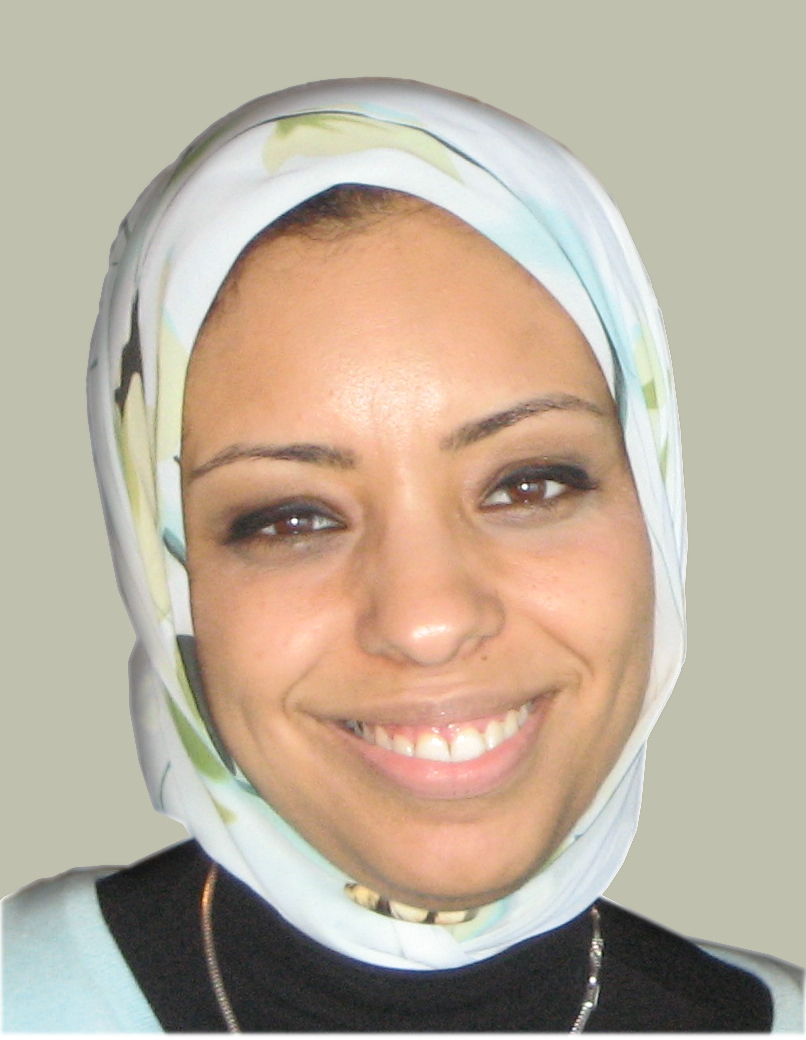
We’ve introduced Dr. Marwa Al-Ansary to you as a civil and environmental engineer, working for Shell on (amongst others) sulfur utilization in materials such as Thiocrete (a type of sulfur concrete).

But what is sulfur concrete really, and why do we care about this? As with many questions we might have, Wikipedia has an answer to that:


"Sulfur concrete is a composite construction material, composed of sulfur, aggregate (generally a coarse aggregate made of gravel or crushed rocks and a fine aggregate such as sand). Cement (commonly Portland cement) and water important compounds in normal concrete are not part of sulfur concrete. The concrete is heated above the melting point of sulfur ca. 140°C. After cooling the concrete reaches a high strength, not needing a prolonged curing like normal concrete. Sulfur concrete is resistant to some compounds like acids which attack normal concrete. Sulfur concrete was developed and promoted as building material to get rid of large amounts of stored sulfur produced by hydrodesulfurization of gas and oil. Sulfur concrete is also a possible building material for a lunar base. Up to 2011 Sulfur concrete is only used in small quantities when fast curing or acid resistance is necessary."
Sadly enough, Wikipedia is using a lot of jargon in this explanation. The explanation focuses on the following topics:

What ingredients do we need for sulfur concrete?
Regular concrete is a combination of sand, stones, cement and water. For those of you that like to DIY around in the backyard, you might be familiar with the 1-2-3 and 1-2-4 recipes of throwing it all together and making fresh concrete. Sulfur concrete on the other hand is made without water, and without cement: it’s simply sulfur, sand and stones.

How do we make sulfur concrete?
Unlike regular concrete, in which you mix everything together, get a liquid product and then wait, sulfur concrete is made by heating the sulfur product with the stones and sand such that they get glued together. This process is similar to making asphalt. Upon cooling, the product has its final strength, and you don’t need to wait like with regular concrete, which reaches its strength over time.

What are the benefits of sulfur concrete as compared to normal concrete?
Sulfur concrete is made without water and cement. As a result, the costs and energy for water supply becomes obsolete. Moreover, the carbon footprint of the product is reduced. Regular concrete leaves a large carbon footprint because the production of cement requires very high (1450oC) temperatures and the process itself is responsible for 5% of all CO2 emission worldwide.

In regular concrete, the cement forms “tubes” inside the material which can take in water. Upon freezing, this water expands and the inner pressure can become so high that the concrete cracks. Sulfur concrete does not have these tubes, and therefore performs better in freeze-thaw cycles.
As sulfur concrete is made by heating the components, it can also be recycled by crushing, reheating and remolding, reducing the waste associated with regular concrete construction.
If you’ve made regular concrete before, you’ve seen that at first it is almost liquid, and then it starts building up its strength over time (we typically test it after 28 days to see how strong it is). Sulfur concrete gains it strength right when it is made – upon cooling down the product has its final strength.

Why is Shell making concrete?
Sulfur is a byproduct from the process of refining gas and oil. To look for ways to implement this product, Shell stimulated research into sulfur concrete, using a sulfur-product to replace part of the bitumen in asphalt and innovative fertilizers for agriculture.

Is it a new invention?
Sulfur concrete has been around since the 1970s. However, because the cost of the modification of sulfur for use in concrete used to be very high, the range of applications was rather small. Now, with the development of the competitively-priced sulfur-concrete binder, the product can finally compete with regular concrete in price, and a wide range of possibilities opens up.

What’s the caveat?
As you can recycle sulfur concrete by heating it up to 135oC, it is not suitable for applications which require temperatures of above 100oC. Therefore, building with this product will require the right provisions such that in the case of a fire, the structure is safe (and doesn’t “melt down”).


This post originally appeared on the TEDx Delft website.

In Her Language

on Sunday, January 6, 2013
In this short video, a courageous autistic women gives us a view in her mostly non-verbal way. She describes how she communicates with her entire surroundings, while those who do not speak her language, describe her as being on her own.

Here’s the video “In my language”.


This post originally appeared on the TEDx Delft website, and now serves as some Sunday inspiration.

The Creative Process: Creativity Without Borders

on Tuesday, December 11, 2012
Floris Visser postulates that scientists are artists – and his opinion hit a nerve for me. An opinion that also fits perfectly in my series about the Creative process.

Too often, we seem to draw a line between the professions and interests. However, when we take a step back, there are common grounds. Just like artists, scientists need to be very creative people in order to make discoveries and advance their field.

The very essence of science is as creative as art – but also the outcome and the observations in science can show an artistic beauty. You might think, for example, of beautiful repetitive patterns in nature, which can either inspire scientists and researchers to take a similar step (remember the bacteria in self-healing concrete that are inspired by the terraces of Pamukkale?) or can inspire artists to achieve, amongst others, the perfect proportions which we see repeated in nature.

You can improve your creativity by developing your creative habit. But today, I'm asking you to take this idea one step further. I'd like to invite you to share a link between art or nature and your profession or research topic in the comments section below. Please share, and inspire others!

This post is an adaptation of an earlier post for TEDx Delft

A Wonderful World of Sensations

on Tuesday, December 4, 2012
Wendy Lampen explains us in a very vivid language how she experiences the world. All sensations impact her brain and collide such that she has linked memories. She gives us an insight on what the world feels like when you have Asperger’s syndrome.

Her brain might function in a different way, but does that simply mean she is abnormal? Or could her different braintype actually add value to our world as well, by shining a light on the world from an angle so unexpected to us? And why is there a mindmap on the screen while she is talking?

The first step to understand how different braintypes can enrich our world, is to listen to an “abnormal” person’s view on reality. Today, Wendy invited us from the TEDxDelft stage to take a trip into her reality. She explains how she senses and makes sense of the world.

Following a good TEDxDelft tradition, she starts with a story from when she was a young child. She describes a trip to the beach where her family was playing cards. In her memory, the stale smell of the cards is predominant, and the texture of the sand. At another point in her childhood, she was rescued by her uncle from drowning. The last drops of water dripping from her face felt like long pink strands of gooey and sticky stuff. But when she explained this experience to her family, they laughed at her. And she noticed that more often people would laugh at her perception of the world – so she decided to keep quiet. After telling us about these childhood memories, her brain makes her relive these experiences – her muscles even tighten and her voice changes.

To give us an insight in how her brain works, Wendy uses the analogy of a sponge. Just like a sponge, her brain absorbs everything she senses, sees, smells, feels, hears – an overwhelming world by times. But when this “sponge” is full, she can’t absorb anything – nothing at all, not even a question someone might ask her. And then some time later, when the “sponge” has dried out a bit again, suddenly the echo of the question might ring in her mind again.

Another aspect of her reality is synesthesia: for her, the number four associates with a typical type of yellow that also makes her feel sick. In general, she sees music and tastes smells and sounds.
Then, she visually explains us how she scans the world: vertically and horizontally, but with blind spots such that instead of a globe she ends up with a doughnut.

You might by now think that her world is just that: overwhelming, too much, weird even? But then she smiles, and shows us how much playtime her brain also gives her: she translates the world into mathematical schemes, she sometimes redraws the images she has in her brain, she can focus for 8 hours on a ball of yarn to create a visual object and she has fun mindmapping her entire world as she lives the fragments of it.

Just like recent research in neuroscience has shown that psilocybin actually mutes the inherent “reducing valves” in the average human’s brain, Wendy showed us how there is actually much more going on than you can imagine.

This post originally appeared as a live blog for TEDx Delft.

Taking the Lab to the Stage

on Tuesday, November 27, 2012
Erik Schlangen looks at cracks in buildings and roads, and considers the material to be ill, not broken. And the ill patient can be healed, as long as initially he contains some simple tricks.


In utter silence, a scientist in lab coat shows up on the TEDxDelft stage, and then there is also a lot of smoke around his small lab setup – you would think Professor Barabas has walked out of your childhood comics. Still in silence, a sample of asphalt broken in two pieces is put in a microwave.

And then we learn what is going on. Regular asphalt has two main disadvantages, Erik explains: water stays on the surface, resulting in splash water and puddles, and driving over asphalt results in high levels of noise, which is a disturbance in a densely populated country like the Netherlands.


Luckily, a solution was found by developing ZOAB (very porous asphalt concrete). As the name says, it is a very porous material, which means that water can drain right through it, and it also works as an insulator for the traffic noise. The architecture of the material is that it is mostly aggregates (stones), with a very small layer of bitumen keeping the stones together.

If you want to know more about asphalt, and how it is made (explained with wonderful cartoons), check out this TEDx talk by Dr. Niki Kringos:


The advantage of the ZOAB is however closely knit to its disadvantage: it wears out easily. The layer of bitumen shrinks, cracks and ultimately causes the connection between the stones to get lost. Raveling occurs, stones come off the surface of the road and can damage your windshield or create potholes.

However, with some smart tricks inside the material, the service-life of the roads can be doubled. The brilliant idea is to mix steel wool fibers into the bitumen. Steel conducts heat very well (compare to placing a steel pan on a stove), and if you add steel fibers to bitumen, the road can be repaired by using heat. Under the influence of heat, the steel fibers will warm up, and melt the bitumen again such that the cracks disappear, and the road is ready for a second round.

After extensive testing in the laboratory, it turned out that a road from self healing asphalt can be used twice as long without needing replacement if it is heat-treated (with an induction machine) every 4 years. With the simple trick of adding steel wool fiber to the bitumen, the government can thus save a lot of money.

The performance ends as it began, with the focus on the lab on stage: the asphalt sample in the microwave is ready. And then the moment of truth, when Erik only holds the top part of the specimen: yes it works, the asphalt specimen that was broken into two parts looks as if nothing happened!

This post originally appeared on the TEDx Delft website as a live blog.

Manon's Tales from the Road

on Sunday, November 25, 2012
On a Saturday night in Fall, with a vague plan of catching up on blogging and delivering guest posts, I find myself completely sunk into the website of the Tractor Girl


As she is preparing the final part of her trip that so far has taken her to South Africa and the Cape, she shares on her website what it takes to prepare a trip to the South Pole. Here are the 3 most surprising parts I came across:


1. Eyes?
In the Arctic, wearing contact lenses is impossible, and special corrected sunglasses are very expensive. As a solution, Manon had her eyes corrected in South Africa – to be able to actually see on the South Pole. Unfortunately, due to a very rare complication, she barely could support light for a while and turned into a modern-age Dracula. It takes some to make it all the way down to the end of the world…

2. Don’t sweat
If you sweat, you die. The problem with sweating in the Arctic is that it will make you freeze to death. As a dancer, Manon’s body learnt to sweat to build up stamina, and in the tropics during her travels to cool down. During her preparation in North Canada, she ended up skiing in the ice cold weather with a tight leather jacket right on her skin, to prevent the sweat and moisture from getting into her clothes.


3. Training with tractor tires
In the YouTube clip here, you can see shots in which Manon is pulling tractor tires on the beach in South Africa… Pulling tractor tires over a sandy surface seems to be the ideal way to prepare for pulling stuff over the snow. The tractor turned out to be the right means of transportation all along for this trip!


This post originally appeared on the TEDx Delft website, and is now reblogged as some Sunday inspiration for you!

Why Blend In if you can Stand Out?

on Thursday, November 22, 2012
I initially wanted to blog about Dr. Marwa Al-Ansary because she is a female civil engineer and researcher, working on concrete (sulfur concrete) who enjoys writing a poetry – enough to entice my curiosity! Little did I know about the bold decisions she made in her life to pursue her interests, and her performance has left me in full admiration.

From Egypt to the United Kingdom to Qatar to the Netherlands – this researcher, engineer, woman has come a  long way to pursue her dreams.


Marwa grew up in a family with mostly boys, and from an early ago on, she’d tell everybody: “I want to become an engineer”. Growing up with so many boys around her, her family was worried, and wondered how they could raise her to become a lady. They grew even more worried when it turned out that her childhood hobby became collecting waste materials and taking that into her bedroom. No one understood her treasure hunts and only saw a kid carrying rubbish into her house. She proudly announced on the TEDxDelft stage today that, 15 years later, she got a degree certifying her to work on other people’s rubbish!

As a young child, she showcased her researcher’s spirit, by always asking questions. Her science teachers were not too happy having her in the classroom – she’d ask question that were either too difficult or too stupid, as they said.

When she graduated with the highest honors from secondary school, she ran home to bring the good news to her family, and tell them that she now finally can go and pursue her dream of becoming an engineer. But her family didn’t approve of her choice, so with a heavy heart she started med school, and 2 weeks later announced she made a switch to mass communications to become a journalist. But secretly, she had enrolled in engineering – and this remained a secret for the next two years. When her mother discovered that secret, she decided to stand up for herself and stay in engineering. However, she made a promise to her family, that one day she’d become a Doctor in Engineering and fulfill her mother’s dream that her daughter would become a Doctor – a promise she kept.

When she decided to stand up for her dream and become an engineer, it was the first time that she went her way and took a bold decision. Many years later, when she was finalizing her PhD in Cambridge, she renounced a promising offer for an academic career and instead decided to join the oil and gas industry. Her adviser thought it was a terrible idea, but she just smiled and took the challenge. Five patents and two international awards later, she again has proven that as the odd duck she can truly make a change.

Sometimes we worry so much about how to blend in, how to conform to others, that we forget ourselves, Marwa explains. We hold ourselves back, while our diversity and different views can truly make a difference. She sums it all up by saying: ” Why do you want to blend in, when you have the opportunity to stand out?”

This post originally appeared on the TEDx Delft website as a live blog during the event.

Never Grow Up: Today, but also Tomorrow

on Thursday, November 15, 2012

Never grow up is our theme for today. Today is the day to eat from a Happy Meal lunchbox, to hop around and shake to the lunchbeats, to make some new friends, to play games, kick some balloons and forget about the reality of the world.

It’s a day in Neverland and you’re Peter or Tinkerbell today. Almost a year of preparations, brainstorming and having fun along the way have brought us to the Big Day. Your five sense are to be thrilled. Your imagination is about to take on a soaring flight. Sit back, but don’t relax – engage with everything and everyone around you.


But this evening you’ll be walking out of these doors again, and when you look back, Neverland might be gone forever.We don’t want the atmosphere to just dry out like that – we want to keep the flame for many more days to come.

So, how can we bring the spark of childhood into our lives? Here are a few ideas I have:

1. Stay curious
Keep asking questions – we already mentioned that. Keep wondering about why you do things, and which constraints these decisions place on your life.
Keep learning, evolving and improving yourself. Reinvent yourself from time to time. Nothing is written in stone.

2. Living light
Remember The Unbearable Lightness of Being by Milan Kundera? Let all that gravitas go, it will only weigh you down. A lost day is just that: a lost day.

3. Play
Play with children, play with pets, play with random objects – there’s no reason why you should give up playing because you’re a grown-up now.

4. Surround yourself with like-minded people
You’re already at a TEDx Event today, with people that love to learn and be inspired. But that shouldn’t end today – there are many opportunities to connect and learn with like-minded spirits.

5. Laugh and sing
Laugh out loud, sing in the shower and whistle while you work – Gretchen Rubin has some good ideas for you on that topic!

This post originally appeared on the TEDx Delft website. 
TEDxDelft LiveBloggers

on Sunday, October 7, 2012
At TEDxDelft, I had the opportunity to be liveblogging in the company of some inspiring writers. The atmosphere in the webcare room was of utter concentration and team spirit at the same time. We all worked hard and arrived to the venue in the very early morning to get started, and I think we can be really proud of all the articles on the TEDxDelft website. Since I can't make floral art like Pim van den Akker, I'll just say that I felt honored to be writing in the company of these wonderful people - and I think you should go and check out their blogs!

2 Flow with Eve: (in Dutch) on working towards a new world of work at Delft University
The Self Help Hipster:  PhD Student in distress, go and read how to improve your condition
Merel graduates: giving you a glimpse of the final year of Merel's studies
la susea: inspiration on design, art, travel, photography and living in Holland
Clineschrijft: (in Dutch) #blogbriljant: bouw een briljante reputatie met je blog
Mandy: (English/ Dutch) on all that catches her attention as a designer
EmmaMedia.cc: (in Dutch) social media and online marketing
Eye on Orbit: on space exploration
Zielsgenot en Pijn: the world of Carolien, recovering from a burn-out
De TekstGroep: Website of journalist and writer Hans Dalmeijer

Storify on TEDxDelft

on Saturday, October 6, 2012
Check out the Storify I made on PhD Talk blogging for TEDxDelft!
It gives you an overview of how I experienced the day, from the night before to the day after.

TEDxDelft: a recap


Yesterday I was liveblogging for TEDxDelft. As you can see in the picture (I'm at the left, in purple), I spent a day in super focus, resulting in 4 articles for the TEDxDelft website of which you can find the links in my summary of guest posts.

As this was only the second time that I was liveblogging, I plan to write a post on my "lessons learned on liveblogging" some time later. As for today, I want to give you a summary of my insights after TEDxDelft.

Since I was liveblogging, I stayed in the webcare room the whole day, and while I was writing about a performer, I had to block out the livestream to focus on writing, so I missed a few performances. Trouble with the livestream also made me miss everything from the opening up to most of the performance of Boyan Slat.

Bennie Mols gave us his view on the future of robots. I learned that our multifunctional human brain uses 20 Watts, as compared to supercomputer Watson's using 6 MW.

The next performer, Marwa Al-Ansary shared her story with us on how she struggled to become an engineer and how she is always the odd duck - but she takes that position with all her courage and makes a change. She left me very impressed and inspired, as parts of her story also resonate with my own experiences.

After missing out a few performances, I was left completed blown away by Sarah Kay's recorded performance at TED2011, leaving a note to myself that I should YouTube spoken word poetry:


After writing this introductory post and getting lost in her world for an entire evening, I was absolutely looking forward to the performance of Manon Ossevoort. Absolutely a performance to watch again some time soon - and my inner explorer was absolutely triggered: if a girl on a tractor with a maximum speed of 20 km/h can drive all the way to Cape Town and be safe, everything is possible.

I had been looking forward to Erik Schlangen's performance on self healing asphalt as well, and I loved the way how he brought a lab to the TEDxDelft stage. And that microwave on stage looked very familiar - I use it (or a similar one in the lab) to warm my soup in the wee hours of the evening.

After the beautiful song by Judith Adema, Ionica Smeets showed us the dangers of ice-cream or, why correlation does not mean causation.

The next performer, Wendy Lampen gave us a look into her world. Having a strange brain myself (it does "parallel processing", I try to explain others) and being highly sensitive, I found myself nodding at the example she gave on how her memories sometimes work. She brought a strong, heart-warming performance on the TEDxDelft stage.

Becci Manson's recorded video is absolutely inspiring as well: using your talents to make an impact on other's lives.


After Tom de Bruyne showed us how a fake online medication website really shocked it's visitors, the winner of the TEDxDelft 2012 award Nupur Kohli brought us lessons from children. Did you know that on average a baby smiles 400 times a day, a youngster 14 and an adult just once? She urges us to become an adult with a child in our heart. I've made a mental note that I should smile more often and ask more questions.

Bas Lansdorp made me dream of heading out to Mars on a trip (provided I can bring hubbie, kittie, burgundy wine and an internet connection with me), and afterwards Nynke Tromp suggest that we should vote on our birthday to avoid the influence of the media performance of the politicians.

At the end of the day, I had the feeling that my brain was on 10.000 Volts. Even though I was dead tired (we started with pep talk at 6:45am and wrapped up around 8pm), I was too fueled up to just crash down when I got home. I learned so much, and I am sure the impression is meant to last. In the meanwhile, I'm looking forward to find the videos of the performers online, so I can catch up with what I missed out on while I was writing.

Liveblogging at TEDxDelft

on Thursday, October 4, 2012
I woke up at 5:45am today to arrive to TU Delft Aula (the main auditorium) in the very early morning to get the organizer's peptalk and get started for a day of writing, writing and more writing (sure will be more than 750 words today!).

The performers I'll be liveblogging about, are Marwa Al-Ansary, Erik Schlangen and Wendy Lampen.

If you want to follow the liveblogs (we're a room full of bloggers ready to give it our best shot), check out the TEDxDelft website. The program is up here (we're in GMT+1 time). You can also follow our livestream, and on Twitter we want to create a #TEDxDelft buzz!

Let's get inspired, release our inner child and remember: never grow up!