Happy Holidays!
Happy Holidays, dear readers!
I hope you all can take some rest, let go of your research, and recharge your batteries. My plans include staying 4 days in the Ardennes in the beautiful South of Belgium.
The regular posts will resume after New Year.
I have tons of plans for PhD Talk in 2013, including a few new series, and 2013 will hopefully be my last year in graduate school, after which I plan to write some general reflecting posts on the whole PhD process, as well as share more of my research in plain English!
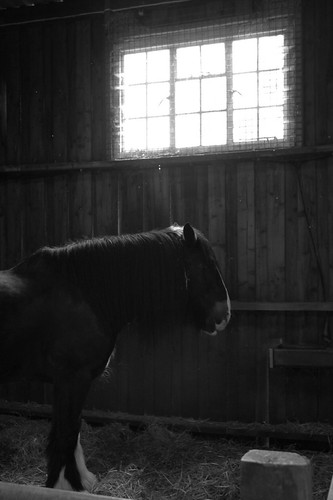
The Shires and the Thoroughbreds of Academia
| Flickr Image under CC by audi_insperation |
Recently I came to realize that there are two archetypal workhorses in academia: the shires and the thoroughbreds.
Let's look at their characteristics:
The Shire
Known for its strength, constitution, and endurance, the Shire horse is known as an English Great Horse and is one of the purest breeds native to the country.
Temperament: Patient; Calm; Docile; Easy-going; Gentle; Hard working.
The Thoroughbred
Thoroughbreds are considered one of the best racing breeds in the world. The breed is well known for its speed, agility, endurance and hotblooded nature.
Temperament: Courageous, alert, spirited, excitable, fast, athletic.
Does that sound familiar to you? Do you consider yourself a shire or a thoroughbred?
Smart Materials, Made in Delft
We’ve introduced Erik Schlangen as Professor “Experimental Micromechanics”. But what does that really mean, and where does he wants the research of his group to result in? In his own words: he wants their inventions to show up when you Google for “future materials”.
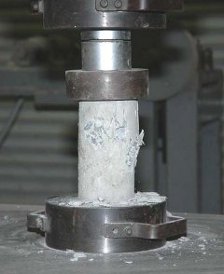
Now let’s consider for example concrete. With very simple and archaic tests, such as the slump test and the compressive test, engineers derive the properties to build our skyscrapers and bridges.
Nowadays, the requirements for concrete are much more complicated though. We can add steel fibers for better performance, reduce the amount of cement for a greener concrete and add retarders and superplastifiers to increase the workability. In the end, we have much more ingredients than the original sand, cement, stones with some water to make it fluid. So how representative are the very basic experiments that we use to derive the properties? Erik and his team aim at finding a way to explain how the material fails.
To explain how complex materials such as the improved concrete fail, better measurement techniques and testing machines are necessary, as well as detailed material models to support these tests. But these techniques and models not only allow the researchers to better understand existing materials – they help them to go one step further and develop better materials.
Very flexible materials, green concrete containing wood fibers, and materials that can heal themselves show us a way into the future, in which we tailor our materials to fit our requirements “a la carte”. Concrete that closes its cracks by using bacteria, and asphalt with steelwool fibers have already been invented by Erik and his colleagues, and now they are studying, amongst others, the fracture properties of graphite as used for the cores in nuclear reactors, and the properties on the interface between the stones and the cement in concrete, two different parts which can come apart.
And what will the future bring? Future materials in Google? One thing is for sure: Erik’s cheerful approach to smart materials reminds us of the eager explorations of our younger selves. Never grow up…
You can view Erik’s presentation at Civil Engineering on his professorship at Collegerama
This post originally appeared on the TEDx Delft website.
Affiliate Links and Sponsorship Opportunities
Some time ago, I stated clearly why I am blogging and that I don't intend to make any money from this. However, you might have noticed the Amazon recommendations in the side bar that have shown up recently, and the transitions of the Book Reviews with a random googled image to an image with an Amazon link.
As you might have understood, I started to use affiliate links to Amazon products. More precisely, if you purchase a book based on my recommendation, I receive a 4% commission on it, that I can use as Amazon store credit to buy me more books.
I'm still reviewing books independently, I won't gush over something that I don't like just to talk people into buying it - but if you find the reviews helpful, you are welcome to support the website in this way.
Also, in order to cover the costs of a few features that I would like to build into the site, I'm willing to accept sponsorships from institutions that share my ideas on education and research.
As you might have understood, I started to use affiliate links to Amazon products. More precisely, if you purchase a book based on my recommendation, I receive a 4% commission on it, that I can use as Amazon store credit to buy me more books.
I'm still reviewing books independently, I won't gush over something that I don't like just to talk people into buying it - but if you find the reviews helpful, you are welcome to support the website in this way.
Also, in order to cover the costs of a few features that I would like to build into the site, I'm willing to accept sponsorships from institutions that share my ideas on education and research.
Academic Lessons from The Story of Success
The Roseto Mystery
In the introduction, we learn that inhabitants of the town Roseto live longer, healthier lives because they have such a closely-knit community. For a PhD project, it is important that you find your community of peers: your fellow students or an online community.For a successful academic career, a good network in your field with fellow academicians and practitioners is important. You can build your network and visibility online and through conferences.
The 10,000-Hour Rule
What does it take to be a good professional? About 10,000 hours of practice, according to Gladwell. How does that translate to the PhD?If you consider the average length of 3 to 4 years for a PhD course, you end up with on average 3,5 years of experience in research and writing.
At 65 hours per week, and 52 weeks per year, minus holidays and the time required to travel to conferences, an average student works about 65 hr/wk*(52 wk - 8 wk) per year.
The magic number of 10,000 hours then appears when you consider:
3,5 yr * 65 hr/wk*(52 wk - 8 wk)= 10,000 hr
Does this calculation show us that you need 10,000 hours to master every skill in life?
I don't think so, just like Tim Ferriss thinks you don't need that much time to learn basketball technique. But to become a professional at something, for example, becoming a researcher, 10,000 hours in the apprenticeship time as a PhD Candidate seems feasible to me.
The Trouble with Geniuses
Another interesting aspect Gladwell discusses is the threshold level for intelligence. Success relates to your IQ, but only until a certain threshold.You need to be smart enough for graduate studies, but once you go over the threshold IQ, there seems to be little difference between the smart kid and the slightly smarter kid.
What matters after the threshold are your other skills, and your savvy to negotiate and interact with others. Indeed, in academia, being smart is not enough - you need to learn your craft and your skills as well.
The Three Lessons of Joe Flom
Joe Flom didn't take the typical path a lawyer in post-war New York followed, as the WASP lawyers in the large existing offices wouldn't hire the young Jewish graduate. Instead, he started working on different things.If you are lucky enough to get hired by an institution with long academic standing, and be put on tenure track, you know what your road will look like.
But there are other options too, although less straight-forward. With my graduation in sight, and a lingering economic crisis worldwide, I might need to go with my axe into the woods and carve my own path.
Harlan, Kentucky
In rugged Appalachia, a "culture of honor" prevails, which -according to Gladwell- can still be found in the reactions of Southerners as compared to people from the Northern States.If you move through the academic world and over the continents in pursuit of your academic career, you might find that cultural differences are very large. When you are new in a country, try to make friends with the locals.
When in doubt on how to handle situations (will someone be offended, is doing this polite or not, how do I bring up this issue?) ask your local trustee.
Even though I'm a Belgian in the Netherlands, I still sometimes need to ask a local if something is OK or not.
The Ethnic Theory of Plane Crashes
Along the same lines, if you move countries, try to find out if you are in a high-power distance or low-power distance community.Understanding the cultural differences is essential in your path to academic success.
Rice Paddies and Math Tests
Hard work alone won't bring you success, but meaningful work with a close relation between work investment and resulting merit will help you move forward.When it comes to research and problem-solving, an example of how Renee discovers that the slope of the y-axis is infinity shows the benefit of chewing through a problem until you really understand it.
Stretching your concentration and doing deep work are essential in moving forward in your field of expertise, and for meaningful publications.
Marita's Bargain
By sending children from poor low-income families to a very competitive school, the gap between these children and children from private schools becomes much smaller.At my alma mater, Vrije Universiteit Brussel, engineering students have classes from 8am to 5pm daily, and are continuously stimulated to put great effort into their studies. The attitude I learned in Brussels has helped me through graduate school - I got used to start early and get studying, on a daily basis.
Gladwell's Outliers is a book I enjoyed reading very much, as it was on the Georgia Tech list of recommendations. In 3 days, I worked my way through it, and this book is written very well such that the act of reading felt relaxing, but at the same time I was learning and gathering new insights - great combination indeed!
Disclaimer: The links to the book in this post are affiliate links: if you buy the book through my recommendation, I get a small percentage that I can spend to buy more books.
The Creative Process: Creativity Without Borders
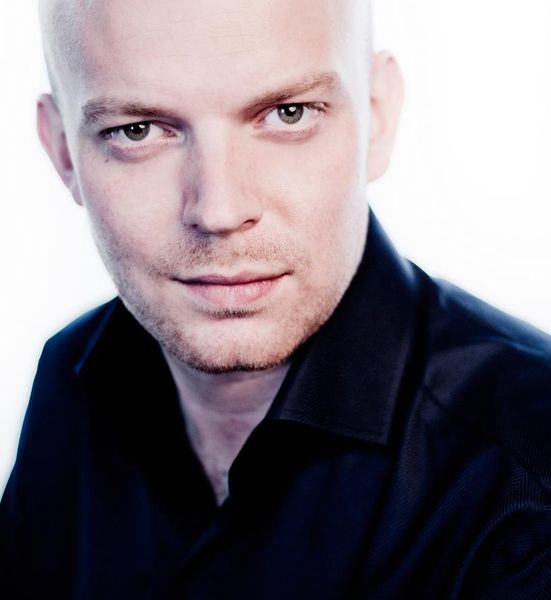
Floris Visser postulates that scientists are artists – and his opinion hit a nerve for me. An opinion that also fits perfectly in my series about the Creative process.
Too often, we seem to draw a line between the professions and interests. However, when we take a step back, there are common grounds. Just like artists, scientists need to be very creative people in order to make discoveries and advance their field.
The very essence of science is as creative as art – but also the outcome and the observations in science can show an artistic beauty. You might think, for example, of beautiful repetitive patterns in nature, which can either inspire scientists and researchers to take a similar step (remember the bacteria in self-healing concrete that are inspired by the terraces of Pamukkale?) or can inspire artists to achieve, amongst others, the perfect proportions which we see repeated in nature.
You can improve your creativity by developing your creative habit. But today, I'm asking you to take this idea one step further. I'd like to invite you to share a link between art or nature and your profession or research topic in the comments section below. Please share, and inspire others!
This post is an adaptation of an earlier post for TEDx Delft
Too often, we seem to draw a line between the professions and interests. However, when we take a step back, there are common grounds. Just like artists, scientists need to be very creative people in order to make discoveries and advance their field.
The very essence of science is as creative as art – but also the outcome and the observations in science can show an artistic beauty. You might think, for example, of beautiful repetitive patterns in nature, which can either inspire scientists and researchers to take a similar step (remember the bacteria in self-healing concrete that are inspired by the terraces of Pamukkale?) or can inspire artists to achieve, amongst others, the perfect proportions which we see repeated in nature.
You can improve your creativity by developing your creative habit. But today, I'm asking you to take this idea one step further. I'd like to invite you to share a link between art or nature and your profession or research topic in the comments section below. Please share, and inspire others!
This post is an adaptation of an earlier post for TEDx Delft
Can Blogging add an Additional Dimension to Academic Publishing?
This post continues the ideas on blogging to tackle publication bias, and blogging for all academics.
As USC Rossier reacted on Twitter by wondering if blogging could overtake peer-reviewed journals, an interesting discussion followed. I storified it for your interest!
Subscribe to:
Posts (Atom)