Over the last few months, I have felt that I gradually started to slip my PhD down on my priority list.
While finishing is still one of my top priorities (don't get me wrong), I've finally managed to let more important things in my life be on top again.
Maybe I simply still am cherishing my honeymoon feeling, but somehow I have the impression that through the wedding preparations, the actual wedding and the honeymoon, I've gained a fresh perspective.
Maybe I am just getting older and finding it easier to put things into perspective.
Maybe it is a consequence of my actions to Simplify, and adopting a more minimalist view on the world.
Whatever caused this, I have recognized this newly gained ability of letting go of worries as one of the greatest tools in the final months of dissertation writing.
And while I cannot really pinpoint what caused this shift in mindset, I can recommend the following ways of letting go and getting a new and refreshed outlook on your PhD research:
1. Escape for a weekend
If your head starts to fill up and your thoughts can't move around anymore, you're already way beyond the point where you need a break. Grab your beloved, your parents, your friends or whoever is up for a little break and head out for a weekend.
2. Take a side project
Divert your thoughts by taking one of your hobbies (as part of forming your creative habit) to the next level. Turn it into an actual side project, and engage in this activity for a significant amount of time per week. Don't just run, but train for a race. Don't just play music, but sign up for an open podium and work towards a performance.
3. List your priorities
Time for a reality check. If you can't think of nothing else but your thesis, have nightmares of everything that can go wrong when printing, or all the possible negative feedback your committee could come up with, then it's time to see if you really wanted your thesis to be the most important thing in your life. No, right? So - grab a pen or open your Google Drive or Evernote, and make a list of what keeps you busy in life. Identify your priorities, and go and spend a little more time on your other interests.
4. Question your worries
For every panicky thought that crosses your mind, you can train yourself to actually question that thought. Ask yourself the following questions:
- What's the reason for this panicky thought?
- To avoid real panic, what should I do?
- If something really needs to be done, when can you do it?
- Schedule it, and tell yourself - see, we are going to do it, and all will be fine.
5. Use a guided meditation
If you can't sleep without the nightmares, try freeing some space in your mind by using a guided meditation,
Taking the Lab to the Stage
Erik Schlangen looks at cracks in buildings and roads, and considers the material to be ill, not broken. And the ill patient can be healed, as long as initially he contains some simple tricks.
In utter silence, a scientist in lab coat shows up on the TEDxDelft stage, and then there is also a lot of smoke around his small lab setup – you would think Professor Barabas has walked out of your childhood comics. Still in silence, a sample of asphalt broken in two pieces is put in a microwave.
And then we learn what is going on. Regular asphalt has two main disadvantages, Erik explains: water stays on the surface, resulting in splash water and puddles, and driving over asphalt results in high levels of noise, which is a disturbance in a densely populated country like the Netherlands.
Luckily, a solution was found by developing ZOAB (very porous asphalt concrete). As the name says, it is a very porous material, which means that water can drain right through it, and it also works as an insulator for the traffic noise. The architecture of the material is that it is mostly aggregates (stones), with a very small layer of bitumen keeping the stones together.
If you want to know more about asphalt, and how it is made (explained with wonderful cartoons), check out this TEDx talk by Dr. Niki Kringos:
The advantage of the ZOAB is however closely knit to its disadvantage: it wears out easily. The layer of bitumen shrinks, cracks and ultimately causes the connection between the stones to get lost. Raveling occurs, stones come off the surface of the road and can damage your windshield or create potholes.
However, with some smart tricks inside the material, the service-life of the roads can be doubled. The brilliant idea is to mix steel wool fibers into the bitumen. Steel conducts heat very well (compare to placing a steel pan on a stove), and if you add steel fibers to bitumen, the road can be repaired by using heat. Under the influence of heat, the steel fibers will warm up, and melt the bitumen again such that the cracks disappear, and the road is ready for a second round.
After extensive testing in the laboratory, it turned out that a road from self healing asphalt can be used twice as long without needing replacement if it is heat-treated (with an induction machine) every 4 years. With the simple trick of adding steel wool fiber to the bitumen, the government can thus save a lot of money.
The performance ends as it began, with the focus on the lab on stage: the asphalt sample in the microwave is ready. And then the moment of truth, when Erik only holds the top part of the specimen: yes it works, the asphalt specimen that was broken into two parts looks as if nothing happened!
This post originally appeared on the TEDx Delft website as a live blog.
In utter silence, a scientist in lab coat shows up on the TEDxDelft stage, and then there is also a lot of smoke around his small lab setup – you would think Professor Barabas has walked out of your childhood comics. Still in silence, a sample of asphalt broken in two pieces is put in a microwave.
And then we learn what is going on. Regular asphalt has two main disadvantages, Erik explains: water stays on the surface, resulting in splash water and puddles, and driving over asphalt results in high levels of noise, which is a disturbance in a densely populated country like the Netherlands.
Luckily, a solution was found by developing ZOAB (very porous asphalt concrete). As the name says, it is a very porous material, which means that water can drain right through it, and it also works as an insulator for the traffic noise. The architecture of the material is that it is mostly aggregates (stones), with a very small layer of bitumen keeping the stones together.
If you want to know more about asphalt, and how it is made (explained with wonderful cartoons), check out this TEDx talk by Dr. Niki Kringos:
The advantage of the ZOAB is however closely knit to its disadvantage: it wears out easily. The layer of bitumen shrinks, cracks and ultimately causes the connection between the stones to get lost. Raveling occurs, stones come off the surface of the road and can damage your windshield or create potholes.
However, with some smart tricks inside the material, the service-life of the roads can be doubled. The brilliant idea is to mix steel wool fibers into the bitumen. Steel conducts heat very well (compare to placing a steel pan on a stove), and if you add steel fibers to bitumen, the road can be repaired by using heat. Under the influence of heat, the steel fibers will warm up, and melt the bitumen again such that the cracks disappear, and the road is ready for a second round.
After extensive testing in the laboratory, it turned out that a road from self healing asphalt can be used twice as long without needing replacement if it is heat-treated (with an induction machine) every 4 years. With the simple trick of adding steel wool fiber to the bitumen, the government can thus save a lot of money.
The performance ends as it began, with the focus on the lab on stage: the asphalt sample in the microwave is ready. And then the moment of truth, when Erik only holds the top part of the specimen: yes it works, the asphalt specimen that was broken into two parts looks as if nothing happened!
This post originally appeared on the TEDx Delft website as a live blog.
Manon's Tales from the Road
On a Saturday night in Fall, with a vague plan of catching up on blogging and delivering guest posts, I find myself completely sunk into the website of the Tractor Girl
As she is preparing the final part of her trip that so far has taken her to South Africa and the Cape, she shares on her website what it takes to prepare a trip to the South Pole. Here are the 3 most surprising parts I came across:
1. Eyes?
In the Arctic, wearing contact lenses is impossible, and special corrected sunglasses are very expensive. As a solution, Manon had her eyes corrected in South Africa – to be able to actually see on the South Pole. Unfortunately, due to a very rare complication, she barely could support light for a while and turned into a modern-age Dracula. It takes some to make it all the way down to the end of the world…
2. Don’t sweat
If you sweat, you die. The problem with sweating in the Arctic is that it will make you freeze to death. As a dancer, Manon’s body learnt to sweat to build up stamina, and in the tropics during her travels to cool down. During her preparation in North Canada, she ended up skiing in the ice cold weather with a tight leather jacket right on her skin, to prevent the sweat and moisture from getting into her clothes.
3. Training with tractor tires
In the YouTube clip here, you can see shots in which Manon is pulling tractor tires on the beach in South Africa… Pulling tractor tires over a sandy surface seems to be the ideal way to prepare for pulling stuff over the snow. The tractor turned out to be the right means of transportation all along for this trip!
This post originally appeared on the TEDx Delft website, and is now reblogged as some Sunday inspiration for you!
As she is preparing the final part of her trip that so far has taken her to South Africa and the Cape, she shares on her website what it takes to prepare a trip to the South Pole. Here are the 3 most surprising parts I came across:
1. Eyes?
In the Arctic, wearing contact lenses is impossible, and special corrected sunglasses are very expensive. As a solution, Manon had her eyes corrected in South Africa – to be able to actually see on the South Pole. Unfortunately, due to a very rare complication, she barely could support light for a while and turned into a modern-age Dracula. It takes some to make it all the way down to the end of the world…
2. Don’t sweat
If you sweat, you die. The problem with sweating in the Arctic is that it will make you freeze to death. As a dancer, Manon’s body learnt to sweat to build up stamina, and in the tropics during her travels to cool down. During her preparation in North Canada, she ended up skiing in the ice cold weather with a tight leather jacket right on her skin, to prevent the sweat and moisture from getting into her clothes.
3. Training with tractor tires
In the YouTube clip here, you can see shots in which Manon is pulling tractor tires on the beach in South Africa… Pulling tractor tires over a sandy surface seems to be the ideal way to prepare for pulling stuff over the snow. The tractor turned out to be the right means of transportation all along for this trip!
This post originally appeared on the TEDx Delft website, and is now reblogged as some Sunday inspiration for you!
Why Blend In if you can Stand Out?
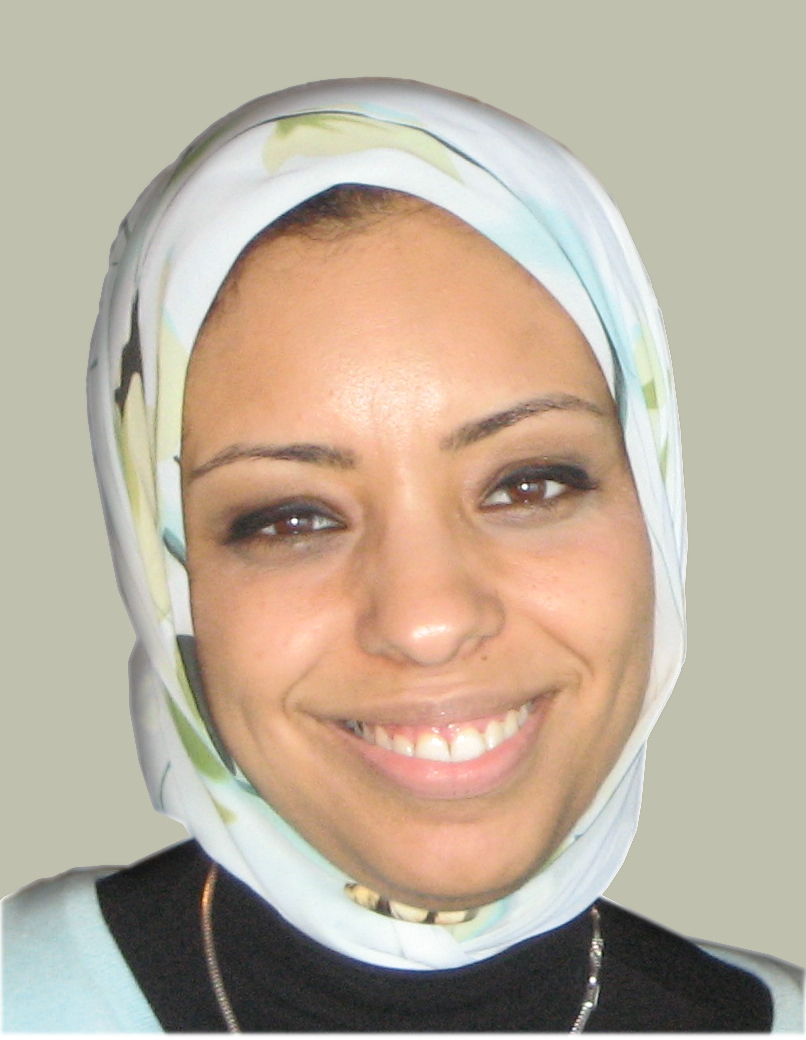
I initially wanted to blog about Dr. Marwa Al-Ansary because she is a female civil engineer and researcher, working on concrete (sulfur concrete) who enjoys writing a poetry – enough to entice my curiosity! Little did I know about the bold decisions she made in her life to pursue her interests, and her performance has left me in full admiration.
From Egypt to the United Kingdom to Qatar to the Netherlands – this researcher, engineer, woman has come a long way to pursue her dreams.
Marwa grew up in a family with mostly boys, and from an early ago on, she’d tell everybody: “I want to become an engineer”. Growing up with so many boys around her, her family was worried, and wondered how they could raise her to become a lady. They grew even more worried when it turned out that her childhood hobby became collecting waste materials and taking that into her bedroom. No one understood her treasure hunts and only saw a kid carrying rubbish into her house. She proudly announced on the TEDxDelft stage today that, 15 years later, she got a degree certifying her to work on other people’s rubbish!
As a young child, she showcased her researcher’s spirit, by always asking questions. Her science teachers were not too happy having her in the classroom – she’d ask question that were either too difficult or too stupid, as they said.
When she graduated with the highest honors from secondary school, she ran home to bring the good news to her family, and tell them that she now finally can go and pursue her dream of becoming an engineer. But her family didn’t approve of her choice, so with a heavy heart she started med school, and 2 weeks later announced she made a switch to mass communications to become a journalist. But secretly, she had enrolled in engineering – and this remained a secret for the next two years. When her mother discovered that secret, she decided to stand up for herself and stay in engineering. However, she made a promise to her family, that one day she’d become a Doctor in Engineering and fulfill her mother’s dream that her daughter would become a Doctor – a promise she kept.
When she decided to stand up for her dream and become an engineer, it was the first time that she went her way and took a bold decision. Many years later, when she was finalizing her PhD in Cambridge, she renounced a promising offer for an academic career and instead decided to join the oil and gas industry. Her adviser thought it was a terrible idea, but she just smiled and took the challenge. Five patents and two international awards later, she again has proven that as the odd duck she can truly make a change.
Sometimes we worry so much about how to blend in, how to conform to others, that we forget ourselves, Marwa explains. We hold ourselves back, while our diversity and different views can truly make a difference. She sums it all up by saying: ” Why do you want to blend in, when you have the opportunity to stand out?”
This post originally appeared on the TEDx Delft website as a live blog during the event.
From Egypt to the United Kingdom to Qatar to the Netherlands – this researcher, engineer, woman has come a long way to pursue her dreams.
Marwa grew up in a family with mostly boys, and from an early ago on, she’d tell everybody: “I want to become an engineer”. Growing up with so many boys around her, her family was worried, and wondered how they could raise her to become a lady. They grew even more worried when it turned out that her childhood hobby became collecting waste materials and taking that into her bedroom. No one understood her treasure hunts and only saw a kid carrying rubbish into her house. She proudly announced on the TEDxDelft stage today that, 15 years later, she got a degree certifying her to work on other people’s rubbish!
As a young child, she showcased her researcher’s spirit, by always asking questions. Her science teachers were not too happy having her in the classroom – she’d ask question that were either too difficult or too stupid, as they said.
When she graduated with the highest honors from secondary school, she ran home to bring the good news to her family, and tell them that she now finally can go and pursue her dream of becoming an engineer. But her family didn’t approve of her choice, so with a heavy heart she started med school, and 2 weeks later announced she made a switch to mass communications to become a journalist. But secretly, she had enrolled in engineering – and this remained a secret for the next two years. When her mother discovered that secret, she decided to stand up for herself and stay in engineering. However, she made a promise to her family, that one day she’d become a Doctor in Engineering and fulfill her mother’s dream that her daughter would become a Doctor – a promise she kept.
When she decided to stand up for her dream and become an engineer, it was the first time that she went her way and took a bold decision. Many years later, when she was finalizing her PhD in Cambridge, she renounced a promising offer for an academic career and instead decided to join the oil and gas industry. Her adviser thought it was a terrible idea, but she just smiled and took the challenge. Five patents and two international awards later, she again has proven that as the odd duck she can truly make a change.
Sometimes we worry so much about how to blend in, how to conform to others, that we forget ourselves, Marwa explains. We hold ourselves back, while our diversity and different views can truly make a difference. She sums it all up by saying: ” Why do you want to blend in, when you have the opportunity to stand out?”
This post originally appeared on the TEDx Delft website as a live blog during the event.
The Creative Process: The Importance of Questions
| Find the interesting ideas behind the trees |
"It is better to know some of the questions than all of the answers. "When carrying out creative research work, asking yourself the right questions is key. Questions are the best tool for actually pointing out a lack in our knowledge. Wondering why certain assumptions are chosen is key to critical analysis of the literature.
Let's look at why you should challenge yourself to ask questions when you are carrying out your literature review or when you are carrying out theoretical work.
1. Taking away pressure
Although the end result might be the same, there is a difference in mindset when it comes -on the one hand- to just trying to figure out the answer to a few questions, because it's fun and you're curious, and -on the other hand- feeling the burden of having to come up with a theory.
2. Breaking down a problem
Asking questions, and identifying what you need to know precisely and study in depth further is the key to problem-solving. While you are imagining you are only formulating questions, you are already moving towards the answer. If you make your questions precise, you already narrow down your search and identify how to get started on solving the actual larger problem.
3. Identifying key points
Again, asking questions and defining what you still need to know, can help you identify key points. When you are doing creative work in science, you will have a few issues that need to be fleshed out. Issues for which you need to sit down and think deeply. But again, these issues fit into a larger framework. Formulating questions can help you those particular key points for which you need to unleash your analytical spirit.
And I challenge you - go and formulate questions!
1) Next time you read an article, do not only jot down your summary, but also come up with 3 questions you think need some further exploration.
2) Next time when you attend a presentation or lecture, try to form 2 questions in your mind. You don't need to raise your hand and actually ask them (which is another barrier to cross if you hate speaking up in public), but this exercise will stimulate your critical thinking.
3) Try to solve a problem by breaking it down in a set of questions you need to answer.
The Creative Process: Reading Sparks Creativity
Reading as part of the creative process? I've discussed reading, and reading loads at length in a previous series of posts discussing archiving, understanding different levels of reading and keeping up with the output.
Reading a lot and keeping up with your field is not only important to have an understanding of what is going on, but it actually fuels your creativity. One of the big wins I noticed during the development of my theoretical work, is that I immediately could link a question to a paper I had read in the past 3 years.
Let me give you an overview of the different ways in which a good understanding of the literature can help you in your creative work:
1. Don't do double work
It might sound obvious, but you wouldn't want to figure out that somebody has already done precisely what you were working on for the past months or maybe years, and has published that work already. Carrying out a literature review before starting is key to understand what has already been done.
2. Identify the boundaries of the current knowledge
So you are going to develop a theory that explains Life, the Universe and Everything in your field... And thus you sit down in a cabin in the woods with paper and pencil and work on your brilliant idea, right? Well, to have a clue where you should get started, provided that you want to advance your field, you need to know what has been done. And you should critically revise the work that has been done, testing the assumptions and wondering where the caveats lie. Through such an analysis, you can determine where to start from with your own work, by working on an open question that you come across when studying the state of the art. Asking questions with regard to the existing work can teach you much more than what is purely written in the existing papers.
3. Know where to find important bits and pieces
Developing theoretical work requires you to look up parts of theories that are already fully developed. If you have carried out a proper literature review, then you have a good overview of these theories. Once you need to implement these in your own model, it is crucial to have read and understood that material. A good background knowledge is of the utmost importance when trying to come up with a novel theory. If you run into an obstacle in your creative work, it is important to be able to quickly go through your memory to see if you've already come across a similar problem in the past.
Reading a lot and keeping up with your field is not only important to have an understanding of what is going on, but it actually fuels your creativity. One of the big wins I noticed during the development of my theoretical work, is that I immediately could link a question to a paper I had read in the past 3 years.
Let me give you an overview of the different ways in which a good understanding of the literature can help you in your creative work:
1. Don't do double work
It might sound obvious, but you wouldn't want to figure out that somebody has already done precisely what you were working on for the past months or maybe years, and has published that work already. Carrying out a literature review before starting is key to understand what has already been done.
2. Identify the boundaries of the current knowledge
So you are going to develop a theory that explains Life, the Universe and Everything in your field... And thus you sit down in a cabin in the woods with paper and pencil and work on your brilliant idea, right? Well, to have a clue where you should get started, provided that you want to advance your field, you need to know what has been done. And you should critically revise the work that has been done, testing the assumptions and wondering where the caveats lie. Through such an analysis, you can determine where to start from with your own work, by working on an open question that you come across when studying the state of the art. Asking questions with regard to the existing work can teach you much more than what is purely written in the existing papers.
3. Know where to find important bits and pieces
Developing theoretical work requires you to look up parts of theories that are already fully developed. If you have carried out a proper literature review, then you have a good overview of these theories. Once you need to implement these in your own model, it is crucial to have read and understood that material. A good background knowledge is of the utmost importance when trying to come up with a novel theory. If you run into an obstacle in your creative work, it is important to be able to quickly go through your memory to see if you've already come across a similar problem in the past.
Never Grow Up: Today, but also Tomorrow
Never grow up is our theme for today. Today is the day to eat from a Happy Meal lunchbox, to hop around and shake to the lunchbeats, to make some new friends, to play games, kick some balloons and forget about the reality of the world.
It’s a day in Neverland and you’re Peter or Tinkerbell today. Almost a year of preparations, brainstorming and having fun along the way have brought us to the Big Day. Your five sense are to be thrilled. Your imagination is about to take on a soaring flight. Sit back, but don’t relax – engage with everything and everyone around you.
But this evening you’ll be walking out of these doors again, and when you look back, Neverland might be gone forever.We don’t want the atmosphere to just dry out like that – we want to keep the flame for many more days to come.
So, how can we bring the spark of childhood into our lives? Here are a few ideas I have:
1. Stay curious
Keep asking questions – we already mentioned that. Keep wondering about why you do things, and which constraints these decisions place on your life.
Keep learning, evolving and improving yourself. Reinvent yourself from time to time. Nothing is written in stone.
2. Living light
Remember The Unbearable Lightness of Being by Milan Kundera? Let all that gravitas go, it will only weigh you down. A lost day is just that: a lost day.
3. Play
Play with children, play with pets, play with random objects – there’s no reason why you should give up playing because you’re a grown-up now.
4. Surround yourself with like-minded people
You’re already at a TEDx Event today, with people that love to learn and be inspired. But that shouldn’t end today – there are many opportunities to connect and learn with like-minded spirits.
5. Laugh and sing
Laugh out loud, sing in the shower and whistle while you work – Gretchen Rubin has some good ideas for you on that topic!
This post originally appeared on the TEDx Delft website.
Shear and Punching 101: Distance in the codes
I recently received a message with the following question:
Normally when we treat the problem of determination of shear stress in slabs, a critical section at a distance of half the effective depth of slab is taken from the support (like columns). Can you explain why this is recommended in many Codes?
Since I think this issue is not very clear in the background of the building codes, I'd like to share what I found while executing my literature review here.
There are two reasons for a distance of d/2 away from the column:
- for punching, you determine the punching perimeter at a certain distance (depending on the code). There is no physical explanation for the distance itself, although researchers like to relate this distance to the inclination of the shear crack that would result from the root of column to the top of the slab where the punching cone intersects (for the case of a flat slab floor for example).
If you look at the background of the codes, for example ACI 318, you find that the chosen distance is based on a better statistical result for the resulting punching perimeter in combination with the ACI formula as compared to test results (work done by Moe, 1961 [1]).
- for shear, we assume direct transfer of the load from its point of application to the support for loads that are at a distance d/2 to d from the column (also depending on the considered code). This direct transfer is by means of a compressive strut, which is of course much stronger than a section in shear.
[1] Moe, J. (1961). Shearing strength of reinforced concrete slabs and footings under concentrated loads, Portland Cement Association Research and Development laboratories, Skokie, IL.
Normally when we treat the problem of determination of shear stress in slabs, a critical section at a distance of half the effective depth of slab is taken from the support (like columns). Can you explain why this is recommended in many Codes?
Since I think this issue is not very clear in the background of the building codes, I'd like to share what I found while executing my literature review here.
There are two reasons for a distance of d/2 away from the column:
- for punching, you determine the punching perimeter at a certain distance (depending on the code). There is no physical explanation for the distance itself, although researchers like to relate this distance to the inclination of the shear crack that would result from the root of column to the top of the slab where the punching cone intersects (for the case of a flat slab floor for example).
If you look at the background of the codes, for example ACI 318, you find that the chosen distance is based on a better statistical result for the resulting punching perimeter in combination with the ACI formula as compared to test results (work done by Moe, 1961 [1]).
- for shear, we assume direct transfer of the load from its point of application to the support for loads that are at a distance d/2 to d from the column (also depending on the considered code). This direct transfer is by means of a compressive strut, which is of course much stronger than a section in shear.
[1] Moe, J. (1961). Shearing strength of reinforced concrete slabs and footings under concentrated loads, Portland Cement Association Research and Development laboratories, Skokie, IL.
Lest we forget
November 11th marks the end of the first World War, and is a holiday in Belgium.
While other countries might celebrate Remembrance Day as a day of glorious victory, in Belgium, and especially in West-Flanders, stories about the horrors of the war, the gas, the trenches and the shell-shock capture most attention.
In Ieper (Ypres), every single day at 8pm, the war is remember by "the last post" at the Menin Gate.
My father was born and raised in Ieper, and often brought the complete demolition of his beloved hometown to my attention. This is all that was left of the city after the war:
For those of you that are interested, I highly recommend the "In Flanders Fields" museum. It's been a while since I visited, but while preparing for the commemoration years 2014 - 2018, the museum has been given a large update.
And if you wondered about the title of the museum, it's taken from the poem by John McCrae:
In Flanders fields the poppies blow
Between the crosses, row on row,
That mark our place; and in the sky
The larks, still bravely singing, fly
Scarce heard amid the guns below.
We are the Dead. Short days ago
We lived, felt dawn, saw sunset glow,
Loved and were loved, and now we lie
In Flanders fields.
Take up our quarrel with the foe:
To you from failing hands we throw
The torch; be yours to hold it high.
If ye break faith with us who die
We shall not sleep, though poppies grow
In Flanders fields.
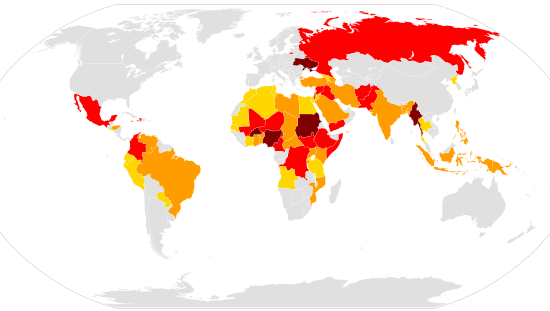
Almost a hundred years later, and peace is still a faraway dream. Here's the map of the current armed conflicts in our world:
While other countries might celebrate Remembrance Day as a day of glorious victory, in Belgium, and especially in West-Flanders, stories about the horrors of the war, the gas, the trenches and the shell-shock capture most attention.
In Ieper (Ypres), every single day at 8pm, the war is remember by "the last post" at the Menin Gate.
My father was born and raised in Ieper, and often brought the complete demolition of his beloved hometown to my attention. This is all that was left of the city after the war:
For those of you that are interested, I highly recommend the "In Flanders Fields" museum. It's been a while since I visited, but while preparing for the commemoration years 2014 - 2018, the museum has been given a large update.
And if you wondered about the title of the museum, it's taken from the poem by John McCrae:
In Flanders fields the poppies blow
Between the crosses, row on row,
That mark our place; and in the sky
The larks, still bravely singing, fly
Scarce heard amid the guns below.
We are the Dead. Short days ago
We lived, felt dawn, saw sunset glow,
Loved and were loved, and now we lie
In Flanders fields.
Take up our quarrel with the foe:
To you from failing hands we throw
The torch; be yours to hold it high.
If ye break faith with us who die
We shall not sleep, though poppies grow
In Flanders fields.
Almost a hundred years later, and peace is still a faraway dream. Here's the map of the current armed conflicts in our world:
The Creative Process: The Creative Habit
In a first post on this series about the creative process, we looked at the conditions you need for creativity. In this post, we focus on a long-term way to find more creative solutions to research questions.
Some people might be naturally more creative than others, some people might seem to enjoy to be creating things and ideas all the time and some people might think that creativity is just not for them. Well I think creativity is something you can develop over time.
Here are a few ways you can use to foster "The Creative Habit", and train your mind to think out of the box:
1. Creativity over a whole spectrum
Pick up an artistic hobby, start blogging and journaling, sketch, get interested in fashion, arts, literature or anything that helps you break out of the bubble of your regular thinking. Debate politics and read up on history. Get your grey matter working!
When you get used to divert your thoughts and focus on other topics, pulling ideas together by looking at them from a different perspective becomes easier as well.
2. Daily creativity
Creativity comes when you make it a habit, when you train it on a daily basis. Try to break out of your research shell on a daily basis.
You can for example schedule activities (music classes, photography classes, painting workshop...) that push you to take time to be creative. Or you can pick up a challenge, like a 365 photography project, or try to write a set of poems within a few months.
3. List ideas
When you are solving a problem in research, don't immediately go with your first idea. Try to sit down and look at the problem from every possible angle. Make a list of possible approaches, and notice that once you start thinking about different possibilities to solve a problem, you will start generating more ideas on how to approach it differently. Again, it's all about the mindset, and knowing that you don't have to come *snap* with a solution, but can sit and reflect.
4. Mindmap ideas
Mindmapping itself involves sketching and drawing, and is in essence a creative process as well. When mapping out ideas, try to explore all the tentacles of your mindmap spider web and explore them just a little deeper to try and seep out some additional thoughts and ideas.
5. Courses on creative thinking
If you're completely stuck, or can't find a way to think in creative ways, know that there are courses out there that are especially aimed at creative thinking for scientists. I haven't followed any of these courses, so I can't come up with a recommendation (I'm the kind of person with more ideas than time to develop them, so a lot of bubbling is always going on up in my mind). The NWO in the Netherlands used to offer classes, it'd be good if they'd bring them back!
How do you develop your creative habit?
Some people might be naturally more creative than others, some people might seem to enjoy to be creating things and ideas all the time and some people might think that creativity is just not for them. Well I think creativity is something you can develop over time.
Here are a few ways you can use to foster "The Creative Habit", and train your mind to think out of the box:
1. Creativity over a whole spectrum
Pick up an artistic hobby, start blogging and journaling, sketch, get interested in fashion, arts, literature or anything that helps you break out of the bubble of your regular thinking. Debate politics and read up on history. Get your grey matter working!
When you get used to divert your thoughts and focus on other topics, pulling ideas together by looking at them from a different perspective becomes easier as well.
2. Daily creativity
Creativity comes when you make it a habit, when you train it on a daily basis. Try to break out of your research shell on a daily basis.
You can for example schedule activities (music classes, photography classes, painting workshop...) that push you to take time to be creative. Or you can pick up a challenge, like a 365 photography project, or try to write a set of poems within a few months.
3. List ideas
When you are solving a problem in research, don't immediately go with your first idea. Try to sit down and look at the problem from every possible angle. Make a list of possible approaches, and notice that once you start thinking about different possibilities to solve a problem, you will start generating more ideas on how to approach it differently. Again, it's all about the mindset, and knowing that you don't have to come *snap* with a solution, but can sit and reflect.
4. Mindmap ideas
Mindmapping itself involves sketching and drawing, and is in essence a creative process as well. When mapping out ideas, try to explore all the tentacles of your mindmap spider web and explore them just a little deeper to try and seep out some additional thoughts and ideas.
5. Courses on creative thinking
If you're completely stuck, or can't find a way to think in creative ways, know that there are courses out there that are especially aimed at creative thinking for scientists. I haven't followed any of these courses, so I can't come up with a recommendation (I'm the kind of person with more ideas than time to develop them, so a lot of bubbling is always going on up in my mind). The NWO in the Netherlands used to offer classes, it'd be good if they'd bring them back!
How do you develop your creative habit?
Pranayama iPhone app
It's been a while since I wrote about mindfulness and meditation, and the reason is that in all the thesis stress, I've been slacking off.
However, I recently started doing some breathing exercises, based on the instructions from an iPhone app. It is called Pranayama by Saagara and -of course, as a cheap graduate student- I use the free, lite version of the app.
Here's what I really like about the app:
1. Guided with just two sounds
The app uses a sound for inhaling and one for exhaling. As a result, you can simply close your eyes and focus on the breathing meditation.
2. Different levels
The free version offers two breathing schemes, and for each scheme you have 5 options for the length of breathing. So, even though it has way less options than the full version (of which I read in the comments that it still has ads in there, so probably it's a bad buy!), it does have enough material in there to keep you entertained for quite some time.
3. Time
You can chose from different options between 5 minutes to 60 minutes to time your breathing meditation session.
4. Automatic tracking
The app also has a log, that gives an overview of what you have exercised so far. However, I just checked my own log and apparently the memory is cleared...
However, I recently started doing some breathing exercises, based on the instructions from an iPhone app. It is called Pranayama by Saagara and -of course, as a cheap graduate student- I use the free, lite version of the app.
Here's what I really like about the app:
1. Guided with just two sounds
The app uses a sound for inhaling and one for exhaling. As a result, you can simply close your eyes and focus on the breathing meditation.
2. Different levels
The free version offers two breathing schemes, and for each scheme you have 5 options for the length of breathing. So, even though it has way less options than the full version (of which I read in the comments that it still has ads in there, so probably it's a bad buy!), it does have enough material in there to keep you entertained for quite some time.
3. Time
You can chose from different options between 5 minutes to 60 minutes to time your breathing meditation session.
4. Automatic tracking
The app also has a log, that gives an overview of what you have exercised so far. However, I just checked my own log and apparently the memory is cleared...
Authenticity in 2.0?
I recently tweeted and wrote on Facebook about a paper rejection. Afterwards, I heard the comment that I should not write about those things, for several reasons:
- People will only remember my bad news and not my good news.
- You have to remain quiet with regard to failures.
- Your "competitors" will read this and feel good about it.
However, my goal on this blog, and on Twitter is to show the real life in academia:
- the lovely places where you get to travel to conferences as well as the late nights in the office;
- the immense joy upon approval of a manuscript as well as the rejections and lessons learned;
- the juggling of tasks as well as the moments of solitude in which you find yourself wrestling with a difficult concept.
I was more than relieved when I read "Being Inappropriate" by Chris Ashford. It also led to a short discussion on Twitter, where I mentioned the negative comments I got on tweeting about paper rejection. I storified the tweets
You might wonder why I tweeted about the paper rejection, but did not dedicate a blog post to it. The reason is that I don't feel like this chapter is finished. I received the comments of the reviewers, and I understood my "mistake". As I was struggling with the word limit, I decided to cut out most of the information on my experiments and refer to previously published work of mine. That technique left me with more words to spend on explaining what I did next (applying the findings to a method for assessment for existing solid slab bridges, and checking a set of existing bridges according to 2 methods). However, the reviewers -rightfully- pointed out they had no idea what the recommendations are based on, and the paper doesn't tell the full story.
For a blog post, I would like to have the story completed - I already know what is missing, but I still need to go and reflect on how I can incorporate all the necessary information into an improved and revamped version of that paper. Therefore, until the story is complete and I know how to tackle the problem, I will not write a full post on it.
So far, I don't think it is harmful to write about rejections and the learning processes in academia (because in the end, you learn from a rejection and you will improve your writing afterwards, no?). But I'd like to know: do you write about rejections? Or do you only highlight your successes and achievements?
- People will only remember my bad news and not my good news.
- You have to remain quiet with regard to failures.
- Your "competitors" will read this and feel good about it.
However, my goal on this blog, and on Twitter is to show the real life in academia:
- the lovely places where you get to travel to conferences as well as the late nights in the office;
- the immense joy upon approval of a manuscript as well as the rejections and lessons learned;
- the juggling of tasks as well as the moments of solitude in which you find yourself wrestling with a difficult concept.
I was more than relieved when I read "Being Inappropriate" by Chris Ashford. It also led to a short discussion on Twitter, where I mentioned the negative comments I got on tweeting about paper rejection. I storified the tweets
You might wonder why I tweeted about the paper rejection, but did not dedicate a blog post to it. The reason is that I don't feel like this chapter is finished. I received the comments of the reviewers, and I understood my "mistake". As I was struggling with the word limit, I decided to cut out most of the information on my experiments and refer to previously published work of mine. That technique left me with more words to spend on explaining what I did next (applying the findings to a method for assessment for existing solid slab bridges, and checking a set of existing bridges according to 2 methods). However, the reviewers -rightfully- pointed out they had no idea what the recommendations are based on, and the paper doesn't tell the full story.
For a blog post, I would like to have the story completed - I already know what is missing, but I still need to go and reflect on how I can incorporate all the necessary information into an improved and revamped version of that paper. Therefore, until the story is complete and I know how to tackle the problem, I will not write a full post on it.
So far, I don't think it is harmful to write about rejections and the learning processes in academia (because in the end, you learn from a rejection and you will improve your writing afterwards, no?). But I'd like to know: do you write about rejections? Or do you only highlight your successes and achievements?
The Creative Process: Conditions
Inspired by my recent theoretical work, I'd like to dedicate a series of posts to the creative process.
The first idea I'd like to discuss is which conditions you need for creative work? Before you get started on developing a new theory, or developing a new design, it is necessary to reflect on what we need for creativity.
In my opinion, you need very little to deliver creative work. As Feynman discussed, you don't need a cabin in the woods and all the time in the world to come up with good ideas.
Now let's look at what I think you need to push forward creative work:
1. Scheduled time
You don't need all the time in the world; I think 2 hours of undisturbed time in your planning can be enough. The key here is to claim that time, free up your schedule and plan those 2 hours - and use that time to the maximum. Use it for creative work, don't start using the "free" time to clean out your mailbox, or catch up on administration work.
2. Comfort
You don't need a cabin in the woods, but to help yourself getting into the right zone, you might like to sharpen your pencil, have space on your desk, have all material ready, a cup of coffee and music to block out the (lab) noise.
3. Mindset
For creative work, your mindset is key. I had been building up quite some tension with regard to my theoretical work - in fact, I hadn't been doing anything yet since all my time was devoted to experimental work, and my promotor had conveyed the message I really had to get started on it because it would take a long time and a lot of effort and searching and frustration. The mere thought of all that brought me panic and lots of impostor thoughts.
Then, I decided to turn around my entire mindset. I thought to myself: "I am just going to answer a question." My entire chapter 6 is the result of a smart question of my co-promotor, which I decided to flesh out completely. So, for my theoretical work, I decided to ask myself questions, and answer them, and if the answer would bring up another question, then I'd continue with answering that question.
Changing my mindset took away most of the pressure I was feeling, and it woke up my curious inner child.
Which conditions do you think are necessary for creative work? I'd love to hear about your experiences!
The first idea I'd like to discuss is which conditions you need for creative work? Before you get started on developing a new theory, or developing a new design, it is necessary to reflect on what we need for creativity.
In my opinion, you need very little to deliver creative work. As Feynman discussed, you don't need a cabin in the woods and all the time in the world to come up with good ideas.
Now let's look at what I think you need to push forward creative work:
1. Scheduled time
You don't need all the time in the world; I think 2 hours of undisturbed time in your planning can be enough. The key here is to claim that time, free up your schedule and plan those 2 hours - and use that time to the maximum. Use it for creative work, don't start using the "free" time to clean out your mailbox, or catch up on administration work.
2. Comfort
You don't need a cabin in the woods, but to help yourself getting into the right zone, you might like to sharpen your pencil, have space on your desk, have all material ready, a cup of coffee and music to block out the (lab) noise.
3. Mindset
For creative work, your mindset is key. I had been building up quite some tension with regard to my theoretical work - in fact, I hadn't been doing anything yet since all my time was devoted to experimental work, and my promotor had conveyed the message I really had to get started on it because it would take a long time and a lot of effort and searching and frustration. The mere thought of all that brought me panic and lots of impostor thoughts.
Then, I decided to turn around my entire mindset. I thought to myself: "I am just going to answer a question." My entire chapter 6 is the result of a smart question of my co-promotor, which I decided to flesh out completely. So, for my theoretical work, I decided to ask myself questions, and answer them, and if the answer would bring up another question, then I'd continue with answering that question.
Changing my mindset took away most of the pressure I was feeling, and it woke up my curious inner child.
Which conditions do you think are necessary for creative work? I'd love to hear about your experiences!
Subscribe to:
Comments (Atom)