Silver Linings: Creating Nurturing Morning Routines

on Sunday, September 29, 2013
For some of us, our morning routine includes nothing more than jumping out of bed, into clothes and rushing out of the door. Others wake up a few hours before heading out to work, and take their time to drink tea, read the newspaper and ease their way into the day.

I, too, have gradually started to take a little more time in the morning to get ready for the day. One year ago, I've blogged about my morning routines, and how I am constantly trying to fine-tune what I do before I get out. As I put it then (and this still holds true):

The ultimate goal is simple: I want to be energized, ready to dive into the day, and with as little friction and time-loss as possible.

Last Spring, I started to wake up earlier to meditate first thing in the morning. I also started taking more time to cook breakfast. After many years of eating cereal (or sometimes oats) for breakfast, I've decided to ditch the sugary stuff and treat myself a balanced breakfast of protein/fat and carbs. Sometimes I have eggs and sweet potatoes, sometimes toasted sprouted bread with avocado, sometimes a breakfast smoothie, sometimes a porridge, sometimes oatbran protein pancakes... all these things take a little more time to prepare, but they work wonders to my energy.

Recently, I've started to practice yoga in the mornings, and finish it off with a longer meditation. That means that I need an extra hour in the morning, and that means waking up around 6am (I'm still using the SleepCycle alarm clock, that's why I mention "around" a certain time).

At the moment, I'm working from home and waiting for getting started on my next employment. That doesn't mean I am staring at the wall or sleeping in every day. My current morning routine looks like this:
6:00 - wake up, brush teeth, drink water, etc.
6:15 - yoga & meditation (typically 40 minutes yoga and 20 minutes of meditation, but times are variable according to how I feel)
7:15 - shower and get dressed
7:25 - cook breakfast
8:00 - start working

Have you paid attention to your morning routines, and how it affects the rest of your days?

The Essential Conference Clothes

on Thursday, September 26, 2013
As I started to travel to conferences, I often found myself faced with the "What should I wear?" dilemma. Being in my mid twenties, I didn't want to give off the impression of being the "lost student" out there without any authority on the topic, nor did I want to dress like someone in their forties - and certainly I didn't want to wrong type of attention you might get as a women in a men's world.

While most advice online on what to wear to conferences and/or as a starting professor seems to focus on being neutral, I'm not too convinced about all the black, navy and grey that is being advised*. It's not because you decided to be a scientist, that you should adhere to society's impression that equates being a scientist to being boring!

Therefore, by all accounts, start from what you like wearing. Are you more comfortable in pants or do you prefer skirts and dresses? What colors do you naturally gravitate towards? I like wearing dresses, if necessary layered over long-sleeved t-shirts. As a result my natural choice would be a dress with a jacket. I prefer clothes with a lot of red and purple, so by no means I'd force myself to wear just navy, grey and black.

If you aren't sure about what style would work for you, borrow some items from a friend, a parent or a sibling. If nobody is willing to send you off with their best clothes to a conference, then go and weed through thrift stores to look for items that you want to try out.

Over time, and after visiting a large number of conferences, I've come up with the following list of essential clothes for conferences:

1. Comfortable shoes
Aerosoles Roler Derby Pump


An obvious choice - you don't want to be limping around because you can't walk around an entire day on those heels. I swear by a pair of Naturalizer shoes and a pair of Aerosoles that I scored for about 30 bucks at DSW.

2. A white blouse
Alexander Wang Combo Blouse


A staple in every wardrobe: try to find a blouse that fits well at the shoulders, the arms, the waist and -please- does not bulge at the buttons.

3. A suit
BOSS Black Melange Jacket


An easy option if you want to test the waters at a conference. Comfortable, and it gives you so many options: you can dress it up and down with accessories, your choice of shirt and you can wear the separates too in different combinations.

4. Good jackets
Banana Republic Metallic Sweater Blazer - New sly stone


Whatever you wear, it looks instantly more dressed up if you add a jacket. Take enough time to find a few jackets that fit well and that are versatile, then start combining.

5. Tops
Jane Norman Floral Peplum Top


At my age, I think it's OK to wear a more casual top combined with a suit or jacket, instead of opting for a blouse. I usually add a flowery top to a suit, to keep everything light and to add a bit of my liking and young age.

6. Conference dinner dress
Essentiel Candle Leaf Printed Silk Dress


Unless your conference is super-formal, I think that it's acceptable to show a little more of your personal taste in the choice of your conference dinner dress. I typically opt for a printed dress, or an all-red dress - because that is what I like. And often the choice is a dress by Essentiel (a mildly affordable Belgian label).

7. Opaque tights

Wolford Individual 100 Leg Support Tights


If you go for dresses or skirts, tights are still a must at conferences. You might opt for bare legs, but I never do so, also because I like how tights flatten bumps and streamline everything.

8. A big purse
Village Convertible Leather Tote Bag, Brown - Cole Haan


Unless you want to drag the conference bag around the entire time, you need a large purse that can fit the conference program, notes, preparation material and whatever you like to have with you. I use an over-sized dark brown leather bag that I've had for many years, but I like how the leather is weathering.

If you want some inspiration, this post on My Laser Boyfriend has a lot of information, and great looks too.

*I might be biased as I was spent too much time wearing a grey - blue - white uniform during my schooldays.

What are your essential conference clothes? Do you have your favorites already, or are you still searching?

Writer's Lab: #GoScholarGo

on Tuesday, September 24, 2013
Today, I have the pleasure of inviting Dr. Scheg to share her views on the unique type of writing that is dissertation writing. Dr. Abigail Scheg is an Assistant Professor of English at Elizabeth City State University and an Adjunct Dissertation Chair for Northcentral University. She researches and publishes in the areas of composition, online pedagogy, and popular culture. She loves working with doctoral students and is dedicated to creating and participating in networks for doctoral student support. Follow her on Twitter @ag_scheg.  

My doctoral program was incredibly supportive; the cohort structure was supportive, the other members of my cohort were wonderful, and the faculty were welcoming and encouraging. The summer workload was more than full-time intensity and all of my cohort members, no matter how much experience they had, were worrying about having “what it takes” to be a doctoral student. In one of our first courses, one from our cohort asked the instructor how long the final paper listed in the syllabus had to be. Her response was, “If you don't know the answer to that question, then you shouldn't be a doctoral student.”

We sat there straight faced, taking notes, not making eye contact at one another too scared to admit that none of us knew the answer and none of us knew what she meant by that. After class we got together and asked general questions, “So how long is your paper going to be?”

At the time, this seemed like an incredibly harsh response that upset many of the members of my cohort, myself included. But upon reflection this experience seems to represent a lot of the self-questioning, self-worth, and challenges in the doctoral learning process. We never actually found out what the answer to the paper-length question was, but there seemed to be two answers:

  1. You should structure your writing as though you were writing it for a journal article, so follow those constraints of length requirement.
  2. All journals are different, so there is no real length requirement; just write as much as you need to write to address your research question.

Although not all of the members of my cohort finished their coursework, it was at that moment that I really began to think about what each member brought to the table. There is a certain level of unnecessary competitiveness in doctoral programs, but everybody has different experiences, interests, and abilities. At some point in the program I felt that I really needed to work on encouraging my classmates/colleagues to do great things. I would try to take notes on what other people were doing so that I could ask them about the progress of their projects; I would try to be cheerful and positive in the midst of seemingly insurmountable workloads; I started to embrace the deep simplicity of encouraging words.

I'm not sure exactly where it started, but I started to write in my emails to colleagues, “Go Scholar Go!” when we would correspond about their projects. It was simple, encouraging, silly, and some people really embraced it. Now that I am finished with my PhD, I still have a number of friends from the program who often use the phrase too. I've started using it on Twitter as a supportive hashtag: #GoScholarGo because I've found that everyone has more work to do than time to do it. Doctoral students may very well need more hours in the day, but more importantly than that, they need individuals to believe in them when those moments of silent doubt consume their thoughts. And we've all been there.

Go Scholar Go.

Silver Linings: Bikram Yoga

on Sunday, September 22, 2013
When I was still in Belgium, I tried out a bikram yoga class in Antwerp. In Pittsburgh, I had tried a hot yoga class, but I was still very curious about bikram yoga.

So, I decided to see what all the buzz is about. Even though I had to drive half an hour 40 minutes to get to the studio and take out an entire Saturday afternoon for this adventure, I decided it was time to make this decision and explore something new, instead of strolling through my hometown, checking out the stores -even though I hardly ever buy anything- and then heading for a tearoom to indulge in pancakes, icecream or waffles. Why not opt for something slightly more healthy and certainly more invigorating?

Unfortunately, the first Saturday class I was planning to attend got cancelled as not enough students showed off. Next Sunday, I tried my luck again - and could experience a bikram yoga class for the first time.

Unlike most yoga classes that I have tried in the past that were mostly vinyasa flow classes, in bikram yoga the asanas are held for a longer time. To learn the asanas correctly, I do think holding them for a longer time, and having the teacher tell you to move your hips, knees and whatever, helps building the correct technique.

Other classes that I've taken are based on the teacher showing what to do in the front, and occasionally walking around. At bikram Antwerp, the teacher continuously talks, and walks around the class.

To my surprise, bikram yoga does not do downward dog poses. No shoulder stands or head/hand stands or armbalances either. A little less of focus on breathing (in my experience, although that could be because I had to concentrate really hard on the movements themselves).

One of the main advantages of bikram yoga, is that it follows the same sequence - every time, regardless where in the world you might be. As I'm mostly on the go, being able to practice the same routine, and improving that routine, regardless of where I am, is a major win.

However, I really couldn't pick between bikram yoga and hot yoga, vinyasa-flow-style. Both are lovely, and I hope to see more hot rooms pop up wherever I travel.

If you too are interested in bikram yoga, I'd advice you to read this guide to your first bikram class - and, well, spend some time on the Self Help Hipster blog, because the way she writes about bikram yoga makes you want to go and try it out. And it might have been related to my eagerness for trying out bikram yoga.

Have you tried out bikram yoga, or another form of hot yoga?

20 Tips for Surviving your PhD

on Thursday, September 19, 2013
PhD studies are the highest level of education, and the road can be frustrating and exhausting at times, but the final result (your dissertation) is at the same time a major achievement in life, and a very rewarding event.

Whenever you feel like you keep on working on the same problem, with no way out, remember that blocks and friction are simply part of the creative process that is research.

When you feel like your world is limited to your lab, your bed and the library - know that there is no shame in taking a break and refueling yourself.

In the 3,5 years of my PhD research (no coursework), I've spent about 40 to 80 hours a week on my research. Sometimes, I was in the lab from 8am to 4pm, and then making calculations for the funding organization from 4pm to 10pm. Major deadlines always tend to fall around the same time. Other times, I left the office at 5pm and spent the entire evening relaxing.

Some people say a PhD costs you a kidney and a lung, other people say it's just like a 9-to-5 job. I say, the truth is somewhere in the middle, and you have the freedom to determine how much time you really want to pour into your work. It's not a linear process, at all - and it's different for every student.

With these precautions in mind, I'd like to share with you my 20 best tips for making it through the PhD, in a time-efficient way:

1. Don't work too hard


It's a PhD, not a Nobel prize - and in this context I'd like to remind you of your sole purpose of your PhD: finding a way to answer your research question, in a novel way, showing that you are an independent researcher.
Everybody has loose ends, but if they are only remotely related to your research question, cut them out and leave them for later (or put them up as an idea for a MSc thesis student).

2. Know when you need to do some extra effort

When major deadlines collide, go into bunker-mode. Don't stay in that mode for too long, but know when you need to put in that extra effort to push things through. It's just a temporary thing, never stay bunkered or hermiting for too long.

3. Take enough breaks during the days

Don't skip your lunch break, for the love of the Flying Spaghettimonster. Browsing the internet does not count as a break. You know what I mean - get some fresh air, talk to a colleague or go and grab a coffee with a friend.

4. Make friends in your department

If you're a foreigner, befriend a local to whom you can turn for advice on the non-written rules in the society you landed in. Make friends with your fellow PhD students, and have fun together. I contribute the "success" of my PhD by and large to being in a great research group, and working closely together with the bestest lab tech and awesomest daily supervisor in history.

5. Go to conferences

If you can find funding, get out of your institution and learn from the rest of the world. Conferences have been my eye-openers, my trial-stages and the place where I made friends within the research community on my topic.

6. Reach out to the industry


Especially true for a PhD in Engineering, which will always keep at least one finger at the pulse of the problems of the World Outside. Try to go to conferences that are attended by industry players, or attend workshops/meetings/... where practitioners of your field come together.

7. Don't forget the bigger scope

When you get frustrated with a detail, remember the bigger scope, and if you're a little on the idealistic side, remember what the Greater Good of your work is: are you making sure the roads/bridges are safe (my case), or protecting baby hearts, or improving water purification? Connect to that feeling of pride and importance on being able to contribute to the greater problems of society for a meager salary.

8. Work up a sweat

After sitting all day behind my computer screen, you need to get your body tired too to be able to get a good rest at night. Try to move your body for at least 15 - 20 minutes a day; and try to find time for 3 to 4 longer workouts per week.

9. Pick up a hobby


Get a hobby that absorbs your mind fully, so that you can concentrated on something completely different than your research. The options are plenty: musical instruments are a great way to clean your mind, but gardening, handiwork, cooking,... all work equally well. Just find something that touches a *dzing* within you.

10. Get your finances sorted out

Avoid financial stress during your studies. Get a good overview of your finances, know in how much debt you will be getting over your studies (if any), and always always have an emergency fund ready in case shit hits the fan. Don't overspend. If need be, roam around in clothes from thrift stores and eat from a discount supermarket. Been there, done that, stayed out of debt.

11. Make time for your friends and family


There will be times when you bunker down and don't call anybody. But make sure you find the time to catch up with your friends and family every now and then. They are what truly matters in the end.

12. Find a routine that works for you


Nobody ever told me to come to campus early, but I've always started some time between 8am and 8:20am at the latest. Having a routine of certain evening/social activities throughout the week, designated cleaning/laundry days and batch-cooking evenings, can greatly help you at getting into a routine that makes sure you get fulfilled in all your needs.

13. Lead your own research

Become the CEO of your own research-enterprise. Take leadership of your project, and come up with ideas. Don't depend too much on your supervisors, make sure you know what to do when they are unavailable for a month or longer.

14. Present wherever you can


Practice presenting your work as often as you can, and for as many audiences as possible. Try giving a TEDx Talk, talk at an industry event and present at as many conferences as possible. Get your face out there, and practice practice practice.

15. Write, write and write some more


Write as often as you can, as much as you can, so that by the time you write your dissertation, you will have become a fluent academic writer. Writing is your single most important task, so make time for it. Practice makes perfect (or at least - experienced), so ask for ample feedback.

16. Get the right fuel

Say goodbye to grilled cheese sandwiches and instant tomato soup, and get yourself some decent food. I'm talking veggies here, as well as quality protein, some good grains and healthy fats (avocados ftw).

17. Read outside of the borders of your research topic

Read as widely around your topic as possible. Having broad peripheral knowledge has helped me in two ways: 1) by teaching me how to think out-of-the-box, and 2) by having a basic understanding of a broader field so that I can more easily follow conference presentations and have chitchat with other researchers.

18. Make time for deep work

Get a good slot of time to do your deep work, as this is the time when you get to push your project forwards. Dedicate an entire morning or afternoon to unraveling one tiny subquestion of your research question.

19. Teach and supervise students

Teaching is incredibly rewarding, and so is supervising thesis students. If you're in a program that does not comprise coursework, it's easy to get fully bunkered down into your small topic. Teaching helps you to regain a broader perspective of your field.

20. Remember why you started this PhD journey in the first place

I have my own reasons why I decided to pursue a PhD, and yours my be very different - but remind yourself from time to time why you started this in the first place. Remember the greater goals you have in mind, and know that it was your personal choice to start.

What is your best advice for surviving the PhD? What keeps you going when the going gets though?

Writers' Lab: Improving narrative in multidisciplinary projects through blogging

on Tuesday, September 17, 2013
As a starting point for today's post, I've chosen Maria Konnikova's excellent blog post on "Why grad schools should require students to blog".

Previously, we've looked at the benefit of blogging for your scholarly work, and how it can be valuable for every single academic. Moreover, we've discussed the possible reasons for blogging - there are many different paths you can take to blogging as an academic.

Earlier on PhD Talk, we've looked at how academic writing can make us better writers. Maria Konnikova shows us how popular writing can make us better academic writers, and how that can increase your chances for success in graduate school, or in her words:

And partway through another all-nighter (I was working under some tight deadlines), I had an epiphany: thank god I’ve spent the last few years blogging, writing a book, and doing freelance journalism. Otherwise, I’d be lost. Truly.

During that epiphany, she realized there is not much of a difference between on the one hand researching for an article for a magazine, bringing material together from different sources, and on the other hand writing about multidisciplinary research, reconciling two different fields of study and their own vocabulary.

As Konnikova explains how she came to an article that turned out to be a goldmine for her research, it is once more clear that it is not through sheer luck that she stumbled upon this piece, it is because blogging thought her to research widely. By the same token, it strengthens my belief that reading sparks creativity, and that grazing around in the literature, wandering off on undiscovered paths might lead us to unexpected goldmines. In Konnikova's words:
To me, as a blogger, cross-citation is standard practice. I have to do it every day when I research a new blog topic or look at the background for a new piece. It’ s natural to include anything that may potentially be helpful—and to put areas in dialogue even if they don’t normally cross over. I don’t feel compelled to stay within any arbitrary academic boundaries; I just use what seems most, well, useful.

She also proposes the following:
I’d go a step further: incentivize students to blog and to write for a popular audience on topics that go beyond their immediate area of interest. At Columbia, for instance, we can write a grant for one of our comprehensive exams. Why not let a series of published blog posts count as well?

Taking this idea one step further, we could recommend multidisciplinary research groups to write posts on a group blog, and practice writing in a style and language that is accessible for all different backgrounds involved in the project. We could invite groups to learn to speak eachother's language by sharpening their narrative into a common ground.

Silver Linings: the Ecuador adventure

on Sunday, September 15, 2013
Today is the very day that I leave Europe and fly to Ecuador to become an assistant professor at Universidad San Francisco de Quito. It's not the most common choice for someone having received a PhD in Western Europe to move to a developing country. The main reasons for going there, though, were related to the possibility for both my husband and I to find academic jobs without having to live thousands of miles away from eachother - and it helps that he is originally from there.

Having lived in a number of countries prior to this adventure, I know that it doesn't really matter to me where I am. As long as I like what I do, get enough sleep, my veggies, music and some sports, my basic needs are covered.

But Ecuador is beautiful, and I will show you five of the things that I most looking forward to enjoy in my new environment.

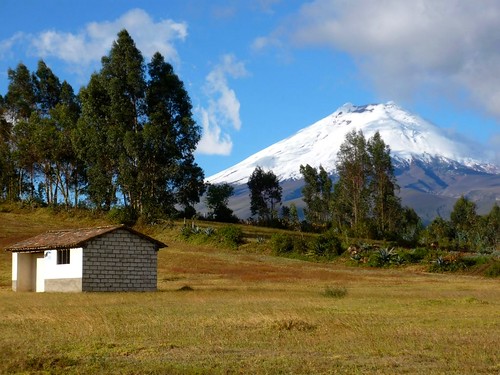
1. The Andean highs

CC licensed image by Flickr userAinhoa Bilbao

Quito is located right in the middle of the Andes mountains, so hiking should be among my new hobbies.

2. Pacific ocean
CC licensed image by Flickr user Carlos Adampol
 Although I'll be 4 hours away from the beach, there should be an opportunity every now and then to go to the beach and warm my bones.

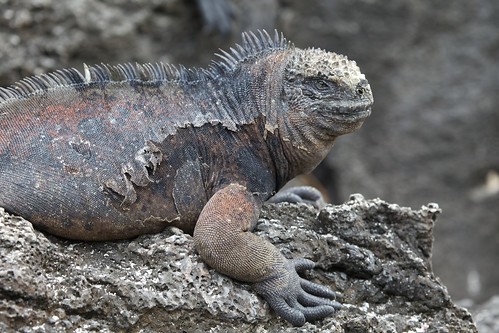
3. Visiting the Galapagos
CC licensed image by Flickr user Ndecam
 On a previous trip, I didn't get the chance to visit the Galapagos islands, and it's still very high on my wishlist.

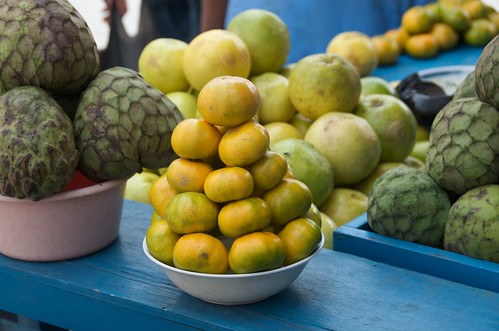
4. Fruit overload
 
CC licensed image by Flickr user A.Davey

One of the things that struck me most of all during my previous visit to Ecuador, is the cornucopia of fruits. There's a juicer in our container - we'll be using it!

5. Roses
 
CC licensed image by Flickr user godutchbaby

Even though roses are associated with English gardens, the roses from Ecuador are famous worldwide (my wedding bouquet contained nothing but Ecuadorian roses).