Silver Linings: the Ecuador adventure

on Sunday, September 15, 2013
Today is the very day that I leave Europe and fly to Ecuador to become an assistant professor at Universidad San Francisco de Quito. It's not the most common choice for someone having received a PhD in Western Europe to move to a developing country. The main reasons for going there, though, were related to the possibility for both my husband and I to find academic jobs without having to live thousands of miles away from eachother - and it helps that he is originally from there.

Having lived in a number of countries prior to this adventure, I know that it doesn't really matter to me where I am. As long as I like what I do, get enough sleep, my veggies, music and some sports, my basic needs are covered.

But Ecuador is beautiful, and I will show you five of the things that I most looking forward to enjoy in my new environment.

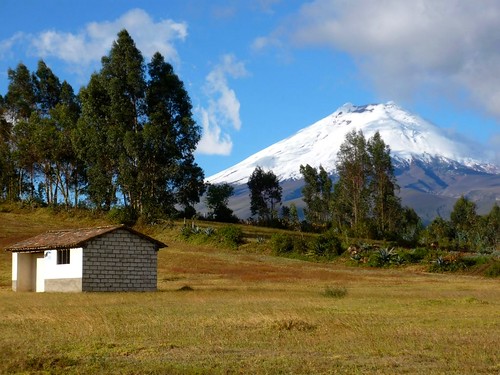
1. The Andean highs

CC licensed image by Flickr userAinhoa Bilbao

Quito is located right in the middle of the Andes mountains, so hiking should be among my new hobbies.

2. Pacific ocean
CC licensed image by Flickr user Carlos Adampol
 Although I'll be 4 hours away from the beach, there should be an opportunity every now and then to go to the beach and warm my bones.

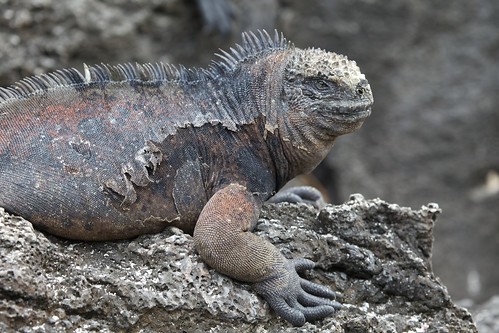
3. Visiting the Galapagos
CC licensed image by Flickr user Ndecam
 On a previous trip, I didn't get the chance to visit the Galapagos islands, and it's still very high on my wishlist.

4. Fruit overload
 
CC licensed image by Flickr user A.Davey

One of the things that struck me most of all during my previous visit to Ecuador, is the cornucopia of fruits. There's a juicer in our container - we'll be using it!

5. Roses
 
CC licensed image by Flickr user godutchbaby

Even though roses are associated with English gardens, the roses from Ecuador are famous worldwide (my wedding bouquet contained nothing but Ecuadorian roses).

Peak shear stress distribution in finite element models of concrete slabs

on Thursday, September 12, 2013
On September 2nd, I gave a presentation with the title: "Peak shear stress distribution in finite element models of concrete slabs" at the Fifth International Conference on Structural Engineering, Mechanics and Computation in Cape Town, South Africa.

What I presented at this conference was not part of my PhD research, but related to a side project that we did together with the Dutch Ministry of Infrastructure and the Environment.

The abstract of the paper associated with this presentation is the following:
For the evaluation of existing slab bridges in the Netherlands, the governing shear stress resulting from composite dead load and live loads is determined from a finite element model. It is necessary to determine over which length (expressed as a multiple of the effective depth) the peak shear stress can be distributed for comparison to the design shear capacity. To answer this question, a numerical model is compared to an experiment. A continuous reinforced concrete slab, representing a half-scale slab bridge, is tested under a concentrated load. The support consists of 7 bearings equipped with load cells, measuring the reaction force profile, that can be compared to the stress profile determined in the finite element model. The comparison of measured reaction force profiles over the support to finite element models results in a research-based distribution width that replaces the rules of thumb that were used until now.


Writers' Lab: Healing through writing

on Tuesday, September 10, 2013

Today, I have the honor to invite Bridgette Dembowski in the writers' lab to share her story on how writing can work as a healing tool, amongst others, for veterans. Bridgette G. Dembowski is the Director of Communications for Bare the Burden Project, a national non-profit agency that serves US military members and veterans recovering from trauma exposure and other invisible psychological wounds of war. Bare the Burden focuses on providing its online community with writing exercises, an anonymous forum for discussion of difficult topics, opportunities to engage in self-reflection, positive peer-to-peer-interaction, and personal growth and healing through the writing process. Mrs. Dembowski is also a contributing author to the edited book project, Diagnosing Folklore: Perspectives on Mental Health, Trauma, and Disability, edited by Trevor J. Blank and Andrea Kitta, scheduled for publication in 2015. Mrs. Dembowski holds a Master's Degree in Human Development and Family Sciences from Oklahoma State University and is currently studying Psychology at Kansas State University. She is married to Captain Matthew J. Dembowski, the Apache Troop Commander of the 4th Squadron, 4th Cavalry Regiment, under the 1st Armor Brigade Combat Team, 1st Infantry Division, U.S. Army. They have one child, Benjamin, who is a 2-year-old budding visual artist and wordsmith, and live in Manhattan, Kansas.

Ernest Hemingway once stated that writing one true declarative statement was all one needed to begin the writing process. Write one thing that is true. Start there. For many, writing is not only a form of communication or story telling, but a tool for self-discovery and healing. Writing in the form of correspondence as well as journaling has been shown to be beneficial for those suffering from loss, grief, traumatic exposure, and other invisible wounds.
The one true statement that Hemingway calls for may be a starting point for some; but in other cases, the one true statement is an achievement and a victory all its own.

As a mental health advocate and a senior member of a non-profit organization that serves military members and veterans, I see writing as an opportunity for healing and growth after victimization, experience, and/or exposure to trauma. Our organization, Bare the Burden, hosts a website that contains an online application. This application provides its users with an interactive and supportive group of peers, bound by their shared experiences of military life and exposure to traumatic situations (including: combat involvement, dangerous environmental exposure, witnessing disturbing images, and others). This site is a safe haven for users to talk to one another, and to write about their memories, experiences, and daily struggles. The focus of the site is to help trauma survivors grow and learn from their experiences. This is accomplished primarily through a guided process that includes writing exercises tailored to the individual user's particular traumatic experience, as well as peer-to-peer interaction and encouragement through written correspondence.

Writing is used as a way for trauma survivors to acknowledge what happened to them or in their presence. It is a way for them to tell their truth, to explore their memories, to examine the fragments of emotions, images, and jumbled sensory perceptions that often times accompany trauma exposure.

That one moment, that one initial post, when a trauma survivor tells their own truth to a community of similar others, peers who are waiting and willing to hear what that individual has to say about what happened to them, that is both terrifying and beautiful. That is the beginning of the process. The truth is exposed. The truth is known, and it can be explored through further directed writing exercises and through open communication between members within the community who may have had similar experiences.

This group-based approach to trauma recovery has been shown to improve the personal mental and physical health of individual group members. Community members give strength and courage to each other to continue on their individual paths to post-traumatic experience recovery and growth. The group is in turn strengthened and empowered in its mission to improve the lives of its members. Once the individual's story is told, the doors are opened. The individual learns that they do not have to suffer in silence. The user learns that talking about the event(s) of the past not only help themselves, but help others. The individual who takes the first step and writes, then becomes the individual who shares insights with others, encourages new members, and remains within the community of writers. Together, they become stronger and encourage one another towards recovery. They develop their own personal insights through their writings over time. Writing is a process, and that process of exploration, examination, and description is a powerful tool for acceptance and for growth post-trauma.

Although I am speaking of the usefulness of writing as a tool for military affiliated trauma survivors seeking relief from a painful past, much of what I am saying about writing, the action and the "doing" of writing, is applicable to really anyone, and most certainly to those navigating the stressful and often volatile world of higher-education.

To you readers who carry the weight of resentment, disappointment, guilt, unfair treatment, hopelessness, fear, or anger, I say this:
Write about it.
Write one thing that is true.
Let it out onto the paper.
No one has to see it.
Tell yourself your truth.
Write what is true, and go from there.
You have as much to gain from the experience of acknowledging your truth and exploring your thoughts and emotions regarding that truth, as any one else.
Silver Linings: Resources for yoga on the go

on Sunday, September 8, 2013
When you are traveling for conferences, having a very busy time in the lab or simply don't feel like coming out of your house, a virtual yoga teacher can provide you with the stretches and relaxation your body is craving.

By all means, I'm not advocating for you to drop your regular yoga class and roll out your mat between your bed and desk for the rest of your days.
Practicing yoga in group and with a teacher who can correct your poses is still a superior way of learning.

Once you have some practice, however, you can use a virtual yoga studio to take your sun salutations anywhere.

Previously, we've looked at how a quick sequence of standing yoga postures can get your blood running again after sitting too long, or simply can give you a lovely break in between pomodoros.

This post gathers a number of resources for you, to practice wherever you have access to the internet, some time and some space.

1. YouTube
YouTube has a virtual endless number of yoga classes available.
The following YouTube channels offer a good number of enjoyable (short) yoga workouts:
Psychetruth (never mind all the conspiracy theory talking and the ugly fonts on their videos, the yoga by Jen Hilman is lovely)
Yogatic - or the YouTube channel of Eckhart Yoga by Esther Eckhart.
LiveStrong Woman has great, short instruction videos by the glorious Tara Stiles.
YogaDownload contains a few slideshow sequences that are clear and easy to follow.
Sarah Beth Yoga also contains good information on how to do certain poses.
Ali Kamenova - power yoga that leaves me dripping from top to toe
eFit30 - a fitness channel with also yoga videos
Yogea ArtFlow Yoga - offer, well, something called artflow yoga
HolmTVs channel - yoga sequences at the beach: pretty to see
YJ Mag short for yoga journal magazine
Danielle Walsh - besides some cheesy astrology stuff, she offers great yoga classes
Yogajan06 or in the flow yoga
BeFiT offers workout videos and some yoga videos

2. Dedicated online websites
My Yoga Online - offers a 10-day free trial of their service. This website is currently my go-to resource.
GaiamTV - not a free website, and I haven't tried it, but the reviews are positive.
Yogayak sells DVDs, and also offers some free yoga instruction classes.
MyFreeYoga has lots of resources, but runs horribly slow
YogaGlo - again, not something I've tried as it is a paid service, but the reviews are positive.
Do yoga with me offers free classes.
Eckhart yoga - again, a website with rave reviews, but I haven't tried their paid-for service

3. Smartphone apps
Yoga for Weight Loss - I have the free version of this app, and the breathe cues are very good
After trying out a number of iPhone apps for yoga, I realized I simply don't like trying to see what's going on on that tiny screen. Also, most apps might come free, but then require a payment to obtain a class.

4. DVDs
An option I haven't really explored yet, but why not browse your local library for a yoga DVD that you can borrow for the time of your conference, or in that extremely busy week?

Have you been taking your yoga along with you?

Five platforms to increase the visibility of your research

on Thursday, September 5, 2013
As a young researcher, you like to share your work with the world. Even though I've focused on online tools you can use to increase the visibility of your research on this blog, there are other platforms that you can use to showcase your work.

Gaining visibility for your research might be more difficult when you start than for a well-established senior professor. Your name might not be known in your field yet, and therefore a little extra effort to bring forth your message might be necessary.

You might think that conferences are enough for you, and someone else might think that online sharing of your work is the best way to increase your outreach. But I beg to differ: try to reach out through different platforms, try to engage with different audiences, and connect with different groups.

Building a reputation for your research shouldn't be linked solely to one platform. You might feel more comfortable at using one given platform, but growing into a well-rounded researchers requires your ability to share you knowledge on the majority of these platforms.

Here are the five main platforms over which you should divide your efforts:

1. Online
Share your presentations on Slideshare, Storify tweets from conferences, update your LinkedIn account, use (micro)blogging to reach out to your peers, keep a profile on Google Scholar, Academia.edu or ResearchGate.

Do you need to be on all these websites, on every single social media platform and constantly chattering away online?
Of course not! Choose wisely, and keep your goal in mind. My (initial) goal was for other researchers to find my work and my contact information when they Google "slabs subjected to concentrated loads in shear". Spend your time online wisely, and make sure you don't get trapped in the black hole of the internet.

2. Industry
Try to show up at industry events and share your work with practitioners. Even though you might be into very theoretical research, it's always useful on one hand to show the industry the value of your (theoretical) research and on the other hand to stay informed about the issues that are important in practice - these both elements can be crucial when you apply for a grant.

3. Within your institution
Don't be an anonymous grey mouse in your institution - but share your work with colleagues. Have a project description on a poster outside of your door, and update your information on your institution's website. Get involved in side projects that bring you in contact with researchers from different disciplines. Let people know what you work on, and where your expertise lies.

4. Conferences

To reach out to peers in your research field, attend conferences and present your work there. Conferences are arguably the most traditional platform to share your work - and it's the best opportunity to share our work with a global community of fellow researchers.

5. Talk to strangers
Life's like a box of chocolates - so if you pick up a conversation on a plane or in line for lunch, then don't brush off questions of others about your work (don't overload them with information either, when they show you not to be too interested in your boring science). You never know how someone might turn out to have a good, practical question for you, or happen to know someone who "does something similar". Embrace serendipity!

What platforms do you use to increase the visibility of your research? Do you focus on one platform, or do you divide your efforts over multiple platforms?

Writer's Lab: Six lessons we can learn from a family of writers

on Tuesday, September 3, 2013
The Stephen King family is an exceptional group of novelists, in which writing seemingly turned into a family business.

While you could marvel in astonishment at the accomplishments of this family of authors, you might like to delve deeper - as I did - to read between the lines and see where their success might result from.

It's obvious from reading their accounts that the King family have their peculiarities, as well as an incredible work ethic.

But reading more deeply, we can distinguish six lessons the example of the King empire teaches us about writing.

Lesson 1: Read a lot
It's obvious from the very beginning of the account about the King family that they read a lot. The children would record audiobooks for Stephen King, and their library seems to be very impressive. You can't write without reading a lot - I've claimed earlier that reading sparks creativity, and their massive background must have been helpful for the Kings.

Lesson 2: Writing takes practice

As a teenager, Joe already wrote for two hours a day. Imagine how many hours of honing out his craft Joe already got in by the time he reached his twenties? Even though all beginning as an author is difficult, the many hours of practice and the search for your own voice all are something that -well- take time. You don't wake up one morning as a great writer - it's the result of deliberate practice.

Lesson 3: Don't be afraid of the big guys
Kelly Braffet married the son of Stephen King, and was very intimated at first. Only now that she published "Save Yourself", she turned to the Kings for advice - before than that, she tried to stay away from their influence. This example teaches us that there's nothing wrong to turn to the big fish to ask for advice - sometimes, they're more welcoming to help you out than you'd might expect.

Lesson 4. Don't be afraid of asking for advice from your partner

Tabitha's influence on King's work is much more than a traditional "stand by your man" approach. As a writer herself, she has given valuable advice to Stephen King. Sometimes it is said that you shouldn't take your work home. This example, however, shoes us that it might be the other way around: discuss openly with your partner what you're working on, especially if you are in the same field. Their expertise is available right there, and will be shared with a lot of love.

Lesson 5: Sit down to discuss others' work/writing
The King family would sit together and discuss other novels, and what could make the plots or characters better. Likewise, you could sit with fellow academic writers when you work through a paper to identify what could have done better in that paper; how to writing more clearly could have conveyed the message. Similarly, I like to take some of my "favorite" papers (i.e. clearly written) when I prepare a manuscript to focus on the precise elements that, in my opinion, make a piece of writing strong.

Lesson 6. Keep it light
The King family would play "the writing game", in which they'd think up scenarios about saving their hero of choice out of danger, and then the next family would be putting him in peril again. They'd also play "Ex Libris", in which they all try to write the best opening line for an existing book. Playing these games keeps their minds vivid, their creativity alive and -most of all- puts the fun into their craft. Never forget to add a drop of fun, joy and lightness to your work and writing - there's already more than enough mediocrity on this world, you might as well add a "zing" to what you do by staying playful.

Silver Linings: On becoming totally unmoved by stressful situations

on Sunday, September 1, 2013
The final months of writing my dissertation, preparing my work for publication and defending my research could have been really stressful months, but I choose not to run on the hamsterwheel and keep my head cool.

I haven't always been so cold-blooded. As a student, I used to be quite anxious for exams - sometimes up to a state of paralysis where I couldn't study because I was worrying so much about not having enough time to study, and consequently didn't really do great on the exam itself.

Over time, I learned how to plan my time, how to study for my exams and what effort was necessary to do great - it gave me confidence, and a sense of control over the situation. If I pour in X hours of concentrated studying, I'm sure I'll get >80% on the exam.

At the beginning of my PhD, that sense of control and "knowing how to do things" were completely gone. Even though I knew how to study, I still had to learn how to research. I was the novice again, and -admittedly- was falling back into patterns of worry and wondering how to assess my work. When is it good enough? How do I even do this?

But by failing, learning, improving and testing the waters, my confidence grew again. I traveled that learning curve faster than during my studies. By the time my nerves had to stand the test against the dissertation, they were as strong as a concrete slab.

Of course, my heart beat went up as I saw the long list of comments from the committee, or when I couldn't get a hold of my supervisor when he had to sign the paperwork. But overall, I just kept calm, figured out what needed to be done, and planned for it. Piece of cake.

I didn't totally overwork myself - yet I did stay in for Saturday and Sunday when necessary, or until later in the evening. But, overall, I had enough time to sleep, do sports, eat my veggies, meditate and write for fun.

You, too, could keep calm and carry on. Ditch the drama, roll up your sleeves and move forward: one edit at a time; one graph, one cup of tea and one paragraph at a time. That is all it takes. It is simple, but not easy.